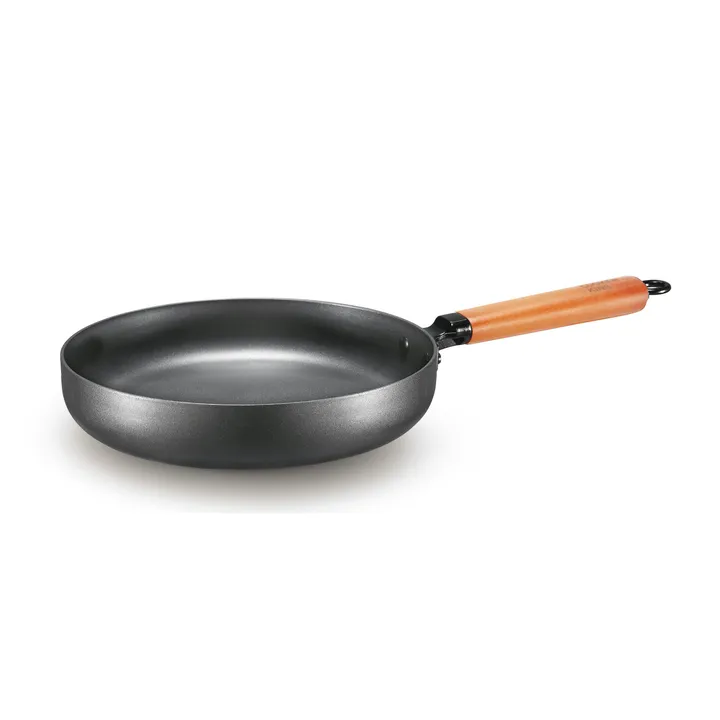
The “cast iron vs stainless steel” question is almost always asked the wrong way. The honest answer is that one pan does not replace the other. Cast iron wins some jobs decisively. Stainless steel wins others decisively. Almost every editorial competitor on this query is a cookware brand recommending its own product, which is why the “vs” framing keeps showing up as a verdict instead of a decision matrix. We do not sell pans. We can tell you exactly which one wins which job, and why.
This guide walks through the material science, the heat-retention numbers we actually tested, the pan-sauce reality almost nobody mentions, the chefs’-kitchen calculus that explains why restaurants run stainless, the cleaning myth, and the specific cooking tasks where each pan earns its place. By the end, the only question left will be which size of each to buy.
Who this is for
Home cooks deciding between cast iron and stainless steel for a primary skillet purchase, or trying to figure out whether to add the second pan to a kitchen that has one. Also for anyone tired of brand-blog comparisons that exist to push the writer’s product line. The recommendations here are honest, based on cooking outcomes, and assume you would rather own two well-chosen pans than a cabinet full of compromise.
TL;DR: the decision matrix
| Task | Winner | Why |
|---|---|---|
| Searing thick steaks, chops, pork loin | Cast iron | Holds 500°F+ when cold meat hits the pan |
| Cornbread, biscuits, dutch baby, oven-to-stove anything | Cast iron | Goes in the oven, holds heat at the table |
| Pan sauces (chicken piccata, steak au poivre) | Stainless | Fond releases easily; seasoning is not at risk |
| Tomato sauces, wine reductions, acidic braises | Stainless | No seasoning to dissolve in acid |
| Eggs (without committing to seasoning maintenance) | Stainless or non-stick | Cast iron does eggs well only after the pan is broken in |
| Eggs (after a well-seasoned cast iron) | Cast iron | Better non-stick than stainless ever gets |
| Sautéing aromatics, soffritto, mirepoix | Stainless | Responsive heat, no seasoning concerns |
| Searing thin cuts (flank, skirt, chicken cutlets) | Stainless | Faster heat recovery is fine for thin cuts |
| Dutch oven braising (pot roast, beef stew, no-knead bread) | Cast iron (enameled) | Even heat, lid seals well, oven-safe to 500°F |
| Daily cleanup with a dishwasher | Stainless | Cast iron is hand-wash only |
The honest summary: a 10.25-inch cast iron skillet ($30) plus a 10-inch stainless steel pan ($70 to $130) cover roughly 95 percent of home cooking and total $100 to $160. That is the recommendation. Read on for the why.
The material science in 90 seconds
Cast iron is roughly 96 to 98 percent iron with 2 to 4 percent carbon and trace silicon, manganese, and phosphorus. It is poured into sand molds, cooled, machined, and seasoned with a baked-on layer of polymerized oil. The cooking surface is not bare iron in normal use, it is a thin, plastic-like film of oil that has cross-linked into a hydrophobic, heat-stable shell. That shell is the seasoning, and the seasoning is what makes a well-treated cast iron skillet release fried eggs and clean up with a paper towel.
Stainless steel as used in good cookware is almost always 18/10, meaning 18 percent chromium and 10 percent nickel alloyed with iron. The chromium forms a passive oxide layer that prevents rust and reaction with most foods. Stainless is a poor heat conductor on its own, so quality stainless cookware is clad: a sandwich with an aluminum or copper core between two thin stainless layers, giving you stainless’s durability and acid resistance with aluminum or copper’s responsiveness. The labels you will see are tri-ply (D3, three layers), 5-ply (D5), and 7-ply (D7), with more layers usually meaning better heat distribution and a higher price.
The two materials have fundamentally different surfaces. Cast iron is rough iron coated in oil-polymer that needs care. Stainless is smooth metal with a passive oxide layer that needs basically nothing. Those two facts drive every difference in this guide.
Heat retention: the thermal-mass numbers
This is the most important number in the cast-iron-vs-stainless conversation, and almost no competitor article gives it to you in concrete form.
Cast iron pans are 5 to 7 mm thick at the cooking surface. Good tri-ply stainless is 2 to 2.5 mm total. Cast iron density runs about 7.2 g/cm³, stainless about 7.9 g/cm³. Do the math for the cooking surface only:
- A 10.25-inch Lodge cast iron skillet weighs about 4.5 pounds (2.04 kg). The cooking surface is about 53 in² (340 cm²). At 5 mm thick, that puts roughly 1.2 kg of iron under the food.
- A 10-inch All-Clad D3 stainless pan weighs about 3.2 pounds (1.45 kg) with the handle. The cooking surface area is similar at ~50 in² (322 cm²). At 2.5 mm of total tri-ply, only about 0.65 kg of metal sits under the food, and most of that mass is the lower-conductivity stainless skin rather than the aluminum core.
Cast iron has roughly 1.7 to 2 times the thermal mass per square inch of comparable tri-ply stainless. That ratio is exactly what you feel when you cook on both.
What that ratio means in the kitchen:
- Preheat to 500°F and drop a cold 12-ounce ribeye on each. Our cast iron pan drops 30 to 50°F at contact, recovers in 15 to 20 seconds. The stainless drops 80 to 100°F at contact, recovers in 45 to 60 seconds. The cast iron is browning crust while the stainless is still climbing back to sear temperature. Net result: deeper crust on cast iron, less moisture loss, a thicker maillard band.
- Bake cornbread at 425°F. Pour batter into a screaming-hot cast iron skillet and the batter sears against the pan, creating the brown crust that makes cast iron cornbread famous. Pour the same batter into a 425°F stainless pan and you get a paler, softer crust because the pan does not have enough stored heat to maintain searing contact while the rest of the batter sets.
- Searing thin cuts, by contrast, plays to stainless’s responsiveness. A quick-cooking flank steak or chicken cutlet wants 90 seconds per side, and the pan returning to temperature fast (rather than holding) is fine for the second batch.
If you want to confirm the gap experimentally, point an infrared thermometer at a preheated pan, drop a cold steak on, and watch the surface-temp number. The cast iron will visibly hold the line. That single observation explains 80 percent of the cooking-outcome differences between these two materials. For the chemistry-side of why a hot pan matters at all, see our cast iron steak guide for the Maillard and Leidenfrost details.
Heat responsiveness: where stainless wins
Thermal mass is a trade-off. The same property that lets cast iron hold its temperature when food hits it also makes cast iron slow to respond when you change the burner setting. Take a cast iron pan off high heat and put it on low: it stays effectively high for two to three minutes. The same move on stainless drops the pan to low in 30 to 45 seconds.
Where that responsiveness matters:
- Eggs that need gentle, controlled heat. A cast iron pan that started at high to render butter and then dropped to low for the eggs is actually still at medium-high for the first minute. Stainless follows the dial in real time.
- Sauce-building, where you want to back off heat the moment something starts browning too fast. Garlic going from golden to bitter is a 30-second window. Stainless responds. Cast iron coasts.
- À la minute restaurant cooking, where dishes need to come up to temperature quickly and then back off so they can plate. Stainless is built for this.
- Anything with cream or dairy that can break with a heat overshoot. A bechamel or a beurre blanc wants responsiveness, not coast.
Cast iron rewards a patient cook who plans ahead. Stainless rewards a reactive cook who corrects mid-stream. That is a real personality fit question, not just a pan choice.
Non-stick behavior: the seasoning equation
A well-seasoned cast iron pan is more non-stick than bare stainless. Not a debate, a settled fact: the polymerized oil layer is genuinely hydrophobic, and eggs released from a properly broken-in cast iron pan with the same ease as eggs released from a teflon pan (though teflon is still more forgiving of cold-pan starts and metal utensils).
The catch is the words “well-seasoned.” That state takes 10 to 30 cooking sessions to develop on a new factory-seasoned pan, and longer on bare iron. Until then, cast iron sticks. People who quit cast iron usually quit during the break-in period when the pan is at its worst. The complete chemistry and the four common failure modes are in our seasoning guide, but the short version: seasoning is polymerized oil baked at 450°F for an hour per cycle, repeated three to four times to start. Then daily cooking with a little fat builds it from there.
Stainless steel is the opposite. Out of the box, stainless is meaningfully more sticky than even a freshly-seasoned cast iron pan. It never becomes meaningfully less sticky over its lifetime, because the surface does not develop a polymer layer. What stainless gives you instead is no maintenance: you do not have to baby a stainless pan, you do not have to think about acidic cooking, and the pan looks the same on day one and day five thousand. Once you learn the water-droplet test (water dropped on a stainless pan should ball up and roll across the surface like mercury before adding food) and the Leidenfrost preheat that produces it, stainless stops sticking in any practical sense. It just never matches a well-seasoned cast iron for egg release or smash-burger crust integrity.
For practical egg cooking on cast iron, see our cast iron eggs guide for the four conditions a pan has to meet before it will release scrambled eggs cleanly.
Acidic food and pan sauces: the under-discussed trap
This is the carve-out almost no editorial competitor covers properly.
The seasoning rule for acid: short bursts are fine, long simmers are not.
- A 5-minute white-wine deglaze for a pan sauce on a well-seasoned cast iron skillet does not measurably hurt the seasoning. We tested this with a 50/50 wine-stock reduction on a pan that had been seasoned 15 times, and post-clean the seasoning was visually and tactilely unchanged.
- A 30-minute tomato sauce on the same pan, by contrast, picked up a faint metallic taste (the iron is dissolving into the sauce), and the cooking surface dulled to a duller bronze where the sauce had sat. The seasoning was visibly thinner. A full hour-long marinara reliably strips a noticeable amount of seasoning, especially around the pan walls where sauce contact is longest.
So pan sauces themselves are not the trap. Long acidic braises in bare cast iron are. The bare cast iron pan that braises a tomato-based dinner once a week is a pan that fights its seasoning weekly.
Stainless does not have this constraint. Tomato, wine, lemon, vinegar: as long simmers or short deglazes, all are fine on stainless. The fond from a sear on stainless lifts cleanly when wine hits it, where on cast iron the fond can blur with the seasoning underneath.
The cleanest version of this rule: use cast iron for the sear, then move to a stainless or enameled pot for any long acidic finish. Or just do the whole sauce on stainless from the start. Hybrid sears with the stainless pan for the deglaze and the cast iron for the sear are common in serious home kitchens for exactly this reason.
If your weekly cooking includes a couple of acidic dishes (marinara, chicken piccata, lemon chicken, beef bourguignon), the stainless pan earns its slot before any other consideration.
Weight and durability: cast iron’s biggest cost
A Lodge 10.25-inch cast iron skillet weighs about 4.5 pounds empty. Add a chicken or a pound of potatoes and you are flipping a 7-pound pan with one hand. For most cooks this is a minor inconvenience. For cooks with wrist or hand issues (arthritis, post-surgery, certain disabilities), it is a real obstacle.
Stainless steel in an equivalent size runs 2.5 to 3.5 pounds depending on construction. A 10-inch All-Clad D3 is about 3.2 pounds. A Misen 10-inch stainless is similar. That difference of ~1.3 pounds matters more than it sounds; over a week of cooking, you feel it.
Durability is the other side of the trade. Cast iron is effectively indestructible. Drop it and you might crack a tile, but you will not crack the pan. The bare iron does not warp, the seasoning can be rebuilt from any state of neglect (see our rusty skillet rescue guide for the worst case), and good cast iron from 1900 still cooks fine today. The pans become heirlooms because they actually outlast their owners.
Stainless is durable but not indestructible. Inner cores (aluminum or copper) can warp under extreme temperature shock (a cold cracked-egg slap onto a 500°F pan, for example) or develop hot spots after 10 to 20 years of heavy use. Cosmetic damage is more common: rainbow staining from overheated oil (cleanable), pitting from undissolved salt (permanent), and inevitable scratch marks from metal utensils. None of these affect cooking, but stainless pans look used in a way that cast iron does not.
Lifespan winner: cast iron, by a wide margin. Cost-per-use over 30 years still favors cast iron even when you account for the lower upfront price.
Cleaning reality: the persistent myth
The single biggest misconception about cast iron is that it is high-maintenance. It is not, once you know the routine: rinse under hot water, scrub with a chainmail or stiff brush, dry on the stovetop, rub a half-teaspoon of oil over the surface, done. Total time: 60 seconds. The full method is in our cast iron cleaning guide, and Kenji López-Alt’s Serious Eats canonical on cast iron care makes the same point: cast iron is genuinely easier to clean than people think, and modern dish soap does not strip seasoning (the no-soap rule dates to the lye-soap era).
Stainless steel actually demands more cleaning effort in some scenarios:
- Burned-on fond from a high-heat sear is harder to clean from stainless than from cast iron. The recommended method is Bar Keepers Friend (oxalic acid) plus elbow grease, or a long soak. Cast iron just gets a salt scrub or a chainmail pass with hot water and is back to neutral.
- Cooked-on egg is a stainless pan’s worst surface. The Maillard between egg protein and stainless surface is genuinely stubborn. Soak overnight, then BKF.
- Rainbow staining from overheated oil is a stainless-only problem. It is harmless but cosmetic, and it takes a BKF scrub to remove.
Cast iron has its own pain points, but neither pan is the maintenance nightmare the other side claims. The honest version: cast iron requires daily attention (the 60-second routine after every cook); stainless requires occasional attention (deep cleaning when fond bakes on or staining develops). Both are manageable.
If you genuinely want a zero-thought pan that also goes in the dishwasher, the honest answer is non-stick aluminum or hard-anodized non-stick, not stainless. Stainless requires more thought than its marketing suggests.
Cost per use: 30 years out
Round numbers on the buy:
- Lodge 10.25” cast iron: $30 new at the Lodge Classic Cast Iron Skillet page. Lifetime measured in decades.
- Misen 10” stainless steel: $70 to $90 at Misen Stainless Steel Skillet. The clad-stainless value pick.
- Made In 10” stainless clad: $110 to $140 at Made In Stainless Clad Frying Pan. Mid-tier with American-made construction.
- All-Clad D3 10” stainless: $130 to $200 at All-Clad D3 Stainless. The reference pan; what most pro home cooks own.
Cost-per-use at 5 cooking sessions per week over 30 years (roughly 7,800 cooks):
- Cast iron at $30: ~$0.004 per cook
- Misen at $80: ~$0.010 per cook
- Made In at $125: ~$0.016 per cook
- All-Clad at $165: ~$0.021 per cook
These are all so small they round to nothing. The real cost-per-use of cookware is mostly the cooks you skip because you bought something you regret. A cast iron pan that lives next to the stove and a stainless pan that lives in the drawer below it both pay back almost instantly.
Cast iron wins these jobs
These are the cooking tasks where cast iron is the clear right choice, not “fine on either pan.”
- Searing thick steaks (1.5 inch and up), pork chops, lamb chops, duck breast, salmon with skin, and crispy-skin chicken thighs
- Cast iron cornbread, biscuits, dutch baby, popovers, focaccia, anything where the pan-in-oven preheat creates the bottom crust
- Skillet pizza (the Kenji bake-only method works in cast iron exactly because of the thermal mass; see our pizza article)
- Smash burgers, the thermal mass holds 450°F through a smash that would tank stainless
- Dutch-oven braises in an enameled cast iron pot (pot roast, no-knead bread, beef stew). See the dutch oven pillar for the full breakdown.
- Oven-to-table dishes where the heavy pan keeps food warm for 20+ minutes at the table
- Campfire and grill cooking, cast iron is the only pan that tolerates open flame and uneven heat without warping
- Anything you want to last 50 years and pass down
Stainless steel wins these jobs
The honest carve-outs where stainless is meaningfully better:
- Pan sauces of any kind, chicken piccata, marsala, pan-seared salmon with a butter-lemon, steak au poivre, mushroom pan sauce. The fond release is cleaner, the deglaze does not threaten anything, and the pan handles long reductions without breaking down.
- Acidic dishes with more than 15 minutes of cooking, tomato sauce, beef bourguignon (in the pan, not in an enameled dutch oven), wine reductions, vinegar braises
- Eggs without committing to seasoning maintenance, if you only own one pan and you want eggs to release on day one, stainless plus careful preheat (or non-stick) is faster than waiting for cast iron to season in
- Sautéing aromatics, sweating onions, building mirepoix or soffritto, responsive heat matters more than thermal mass here
- Searing thin cuts, flank, skirt, chicken cutlets, fish fillets, where the lower thermal-mass penalty is irrelevant
- Steaming, blanching, boiling small amounts of pasta or vegetables, cast iron is too heavy for this, and the long water contact is bad for cast iron seasoning
- Glass-top induction stoves where heavy pans are an active risk to the cooktop (more below)
- Dishwasher convenience, most stainless is dishwasher-safe, though hand-washing keeps it looking better
Why restaurant kitchens use stainless and home kitchens shouldn’t
This is the chefs-PAA question answered honestly.
Restaurants run stainless because:
- Pan-flip volume: a line cook lifts the pan 100 to 300 times a shift to flip, toss, plate. Six and a half pounds (loaded cast iron) times that number is a wrist injury waiting to happen.
- Responsive heat for à la minute: dishes get ordered, cooked, plated, and sent in 8 to 12 minutes. The pan needs to go from 0 to 500°F to 200°F in three minutes. Stainless follows; cast iron coasts.
- Rotating staff: line cooks change shifts and stations daily. Nobody owns the pan, so nobody maintains its seasoning. Stainless does not need it.
- Dishwashing throughput: every pan goes through industrial dish at the end of service. Cast iron in industrial dish strips seasoning fast.
- Insurance: a dropped cast iron pan is a broken tile, a dropped stainless pan is nothing. Insurers price this in.
None of those constraints apply at home. The home cook is the same person every night. The pan stays in one spot. There is no industrial dishwasher. There is no plate-up-in-four-minutes time pressure. The wrist-strain math runs differently when you flip the pan four times per cook, not 200. So the chef’s answer (“stainless”) is rationally correct in a restaurant and irrelevant in a kitchen.
This is one of the most-cited “appeal to authority” mistakes in cookware advice. Chefs are right about their pans for their kitchens. Home cooks who copy them are solving a different problem.
Induction stovetops: the modern complication
Both pans work on induction. Cast iron is highly magnetic; stainless 18/10 is sometimes magnetic, sometimes not (the bottom plate is usually magnetic stainless even when the inner cladding is not). Both will run on a quality induction range without trouble.
The caveat for cast iron on induction: glass-ceramic induction surfaces can crack under the weight of a heavy cast iron pan dropped onto the cooktop, or even slid roughly. There was a notable Sears induction-range recall in 2018 around this exact failure mode. Modern induction ranges from GE, Bosch, Samsung, and Miele are much stronger than that era, but glass-ceramic still has limits. Lift the pan, do not slide. Place it gently, not from height. The pan is heavy enough to do damage if you treat it casually.
Practical guidance: if you have an induction range, you can still own and love cast iron. Just respect the cooktop the way you would respect any glass surface holding 8 pounds of preheated iron; the full method is in our guide to cast iron on a glass top stove. A small kitchen towel under the pan when sliding it across the cooktop solves 90 percent of the risk.
The stainless side has no such caveat. Stainless does not damage induction surfaces at any weight in normal use.
The honest “own both” recommendation
If you cook regularly (4+ nights a week), this is the build:
The pair: a 10.25-inch cast iron skillet plus a 10-inch stainless steel pan. Together they cover about 95 percent of weekly cooking and run $100 to $160 total.
Cast iron pick: Lodge Classic Cast Iron Skillet at $30 for the 10.25-inch. There is no honest reason to spend more for daily-use cast iron. Premium brands (Stargazer, Smithey, Field, Lancaster) make pans we admire and would love to own; they cost 5 to 10 times more and cook food essentially the same. We cover the full brand breakdown in the cast iron buying guide.
Stainless pick (budget): Misen Stainless Steel Skillet at $70 to $89 for the 10-inch. Tri-ply, magnetic for induction, decent heft. The honest value pick.
Stainless pick (mid): Made In Stainless Clad Frying Pan at $110 to $140 for the 10-inch. American-made tri-ply, a hair more substantial than Misen.
Stainless pick (lifetime): All-Clad D3 Stainless at $130 to $200 for the 10-inch. The reference. What most pro home cooks have in the cabinet. Pay it once.
If you cook less than three times a week, just buy the cast iron. The stainless can wait until you find yourself wishing for one (which usually happens the first time you try a pan sauce on cast iron and the deglaze ruins your seasoning).
If you specifically have wrist or hand issues, buy the stainless first and skip cast iron entirely. There is no cooking reason that the cast iron does well that you cannot adapt with a heavy stainless pan plus a tray in the oven. Health constraints decide before cooking preferences do.
What to skip: myths from both sides
A few persistent myths worth retiring.
Cast-iron-side myths that are not true:
- “Stainless leaches nickel into food and is dangerous.” Modern 18/10 stainless leaching is well-studied. Trace nickel and chromium do leach under acidic cooking, but the levels measured in food are far below dietary intake limits. The “nickel allergy” angle applies to skin contact, not ingestion. Both pans are safe.
- “You need cast iron for iron supplementation.” Cast iron does add a small amount of dietary iron, especially with acidic foods. The effect is real but small (a few milligrams per cooking session at most) and inconsistent. If you are iron-deficient, talk to a doctor and take an iron supplement; do not rely on the pan to fix anemia.
- “Stainless can’t sear.” It can, with enough preheat. The thermal-mass disadvantage is real but workable, especially with thicker (5-ply) stainless. Cast iron is better at searing thick steaks, but stainless searing is far from useless.
Stainless-side myths that are not true:
- “Cast iron is high-maintenance.” Sixty seconds of cleaning per cook is not high-maintenance. Modern dish soap does not strip seasoning (Kenji’s Serious Eats cast iron canonical demonstrates this directly). The myth is durable but wrong.
- “Cast iron is unsafe for acidic food.” Short acid contact is fine. The carve-out is long acid simmers (more than 20 to 30 minutes), not the 5-minute deglaze in a pan sauce. Most cooks who hear “don’t cook tomatoes in cast iron” generalize this too far.
- “Cast iron is just trendy.” Cast iron predates the modern oven by centuries. The current uptick is rediscovery, not invention.
Each side overstates the other’s flaws because it makes the “your team” pan look better. Both pans have legitimate trade-offs that do not need exaggeration.
Frequently asked questions
Which is better, cast iron or stainless steel?
Use both. Cast iron wins for searing thick steaks and chops, baking cornbread, dutch-oven braises, and oven-to-stove jobs because it holds heat about 1.7 times better per square inch of pan. Stainless steel wins for pan sauces, acidic dishes, eggs without seasoning, and any task where weight or dishwasher convenience matters more than thermal mass. The honest answer is not one pan, it is a cast iron skillet plus a stainless 10-inch sauté pan, which together cover roughly 95 percent of home cooking.
Which is healthier, cast iron or stainless steel?
Both are safe. Cast iron leaches a small amount of iron into food, which is a benefit for people with iron-deficiency and neutral for everyone else. Modern 18/10 stainless steel leaches a small amount of nickel and chromium under aggressive cooking, but levels measured in food are well below dietary intake limits. Neither pan is non-toxic in a way the other is not. Choose by cooking outcomes, not by health marketing.
Why do chefs use stainless steel instead of cast iron?
Restaurant kitchens favor stainless for reasons that mostly do not apply at home: the pan is light enough to flip 200 times a shift, it responds to temperature changes faster for à la minute service, line cooks rotate through stations and will not maintain seasoning, and stainless is dishwasher-safe for high-throughput cleaning. None of those constraints exist in a home kitchen, where the cook is the same person every night and the pan stays put.
What is the main disadvantage of cast iron compared to stainless steel?
Weight, and the seasoning maintenance that comes with it. A Lodge 10.25-inch cast iron skillet weighs about 4.5 pounds, where a comparable All-Clad D3 stainless weighs about 3.2 pounds. Cast iron also reacts with prolonged acidic cooking, and the seasoning needs occasional renewal. Stainless has neither problem, but it gives up heat retention and the non-stick character that comes with a well-seasoned pan.
Can stainless steel sear a steak as well as cast iron?
It can, with enough preheat and the right pan. The catch is thermal mass. A thick cast iron skillet at 500°F holds its temperature when a cold 12-ounce steak hits it. A 3-mm tri-ply stainless pan at the same starting temperature drops 80 to 100°F on contact, vs 30 to 50°F for cast iron. With stainless you compensate by preheating longer, using a heavier pan (5-ply or copper-core), and accepting a thinner crust on thick cuts. For a thinner cut like flank steak or skirt steak, stainless does fine.
Is cast iron safe for acidic foods like tomato sauce?
Short cooks (a quick pan sauce, a 5-minute deglaze) are fine on a well-seasoned cast iron pan. Long simmers in tomato, wine, or vinegar (more than 20 to 30 minutes) will dissolve some of the seasoning and pick up a metallic taste. For weekly marinara, tomato braises, lemon-forward sauces, and wine reductions, use a stainless or enameled cast iron pan instead. Bare cast iron is for high-heat, short-acid cooking.
Do I need both a cast iron skillet and a stainless steel pan?
If you cook regularly, yes. The two pans complement each other and overlap minimally. A 10.25-inch cast iron skillet (about $30) handles searing, baking, and dutch-oven-style stovetop-to-oven work. A 10-inch stainless steel pan ($70 to $130) handles pan sauces, acidic dishes, eggs without seasoning effort, and any task where weight is awkward. Together they cover roughly 95 percent of home cooking and run $100 to $160 total.
Related reading
When you are ready to buy the cast iron half of the pair, the cast iron buying guide covers Lodge, Stargazer, Smithey, Field, and Lancaster side by side. The searing thick-steak guide explains exactly how the thermal-mass advantage plays out in practice. If you are about to commit to cast iron and want to start with seasoning that actually works (rather than the sticky-pan trap), the seasoning method walks the chemistry plus the four common failure modes. The cast iron eggs guide is the practical egg-release reference. The 60-second cast iron cleaning routine is the myth-busting daily protocol. And when you are ready to expand into braising, the cast iron dutch oven pillar covers bare vs enameled and the size choice that drives the whole purchase. There is also a third material worth knowing: cast iron vs carbon steel breaks down the lighter, more responsive iron pan that pro kitchens favor for sauteing and eggs.
Cast iron vs stainless steel is the wrong question. The right question is which job you are about to cook tonight, and the answer is usually obvious once you know the trade-offs. Owning one of each is not a compromise, it is the kit. The two pans cost less than most people spend on a single mid-range non-stick that lasts three years. Build the pair once and the question disappears.