The cast iron vs carbon steel question confuses people because the two pans look like cousins: both are bare seasoned iron, both need no coating, both last for decades, and both season the same way. So most comparisons hand-wave the differences and tell you “it depends.” It does depend, but on exactly one thing, and once you understand it the whole comparison becomes obvious.
That one thing is thickness. Carbon steel is rolled thin (2 to 3 mm). Cast iron is poured thick (5 to 7 mm). Every meaningful difference between these pans, weight, how fast they heat, how fast they respond to the burner, how much heat they hold, whether they warp, even what shape they come in, flows from that single fact. This guide walks the thickness logic all the way through, gives the tested weight and heat numbers nobody else publishes, explains why carbon steel is shaped like a frying pan and cast iron like a bucket, and tells you which one to buy first. If you have read our cast iron vs stainless steel breakdown, this is the third pan in that picture.
Who this is for
Home cooks deciding between a cast iron skillet and a carbon steel pan, or cast iron owners wondering whether carbon steel is worth adding. Also for anyone who loves how cast iron cooks but finds it too heavy, because carbon steel is the most direct answer to that specific problem. The recommendations here are honest and based on cooking outcomes; we do not sell pans, so we have no reason to push you toward the more expensive one.
Cast iron vs carbon steel: the decision matrix
| Task | Winner | Why |
|---|---|---|
| Eggs, omelets, crepes | Carbon steel | Lighter to lift and tilt, responsive heat, flared sides for folding |
| Stir-fry, saute, toss-cooking | Carbon steel | Sloped walls toss food back into the pan; fast heat response |
| Fish fillets, delicate proteins | Carbon steel | Slides a thin spatula under the food; responds when you back off heat |
| Searing thick steaks and chops | Cast iron | Highest thermal mass holds 500°F when cold meat hits |
| Cornbread, biscuits, tall bakes | Cast iron | Walled shape holds batter; mass builds the bottom crust |
| Braising, dutch-oven work | Cast iron | Capacity and even retained heat; carbon steel is too shallow |
| Camping, open fire, the grill | Cast iron | Warp-proof under uneven flame; carbon steel can deform |
| Acidic cooking (short bursts) | Either (cast iron edge) | Both handle a quick deglaze; cast iron’s thicker seasoning is more forgiving |
| Glass or electric cooktop | Cast iron | Carbon steel can warp and lose flat contact on these surfaces |
| Anyone with wrist or weight concerns | Carbon steel | 30 to 45 percent lighter than equivalent cast iron |
The honest summary: carbon steel is the lighter, faster, frying-pan-shaped iron pan for stovetop cooking that involves motion (flipping, tossing, folding). Cast iron is the heavier, heat-holding, walled iron pan for searing, baking, and braising. If you want one pan and cook a bit of everything, a $30 cast iron skillet is the higher-value start. If your cooking is mostly eggs, sautes, and stir-fries, carbon steel earns its higher price.
The one difference that explains everything: thickness
Carbon steel is sheet metal. It starts as a rolled steel blank, 2 to 3 mm thick, and is pressed or spun into a pan shape. Cast iron is poured: molten iron goes into a sand mold and solidifies at 5 to 7 mm thick (thicker at the base of cheaper pans). That is a 2x to 3x difference in how much metal sits between the burner and your food, and it drives all five of the behaviors people actually care about.
- Weight: more metal means more mass. Carbon steel is dramatically lighter (numbers below).
- Heat-up speed: less metal means less to heat. Carbon steel reaches cooking temperature noticeably faster.
- Responsiveness: less metal means the pan tracks the burner. Turn the heat down and carbon steel follows in seconds; cast iron coasts for minutes.
- Heat retention: less metal means less stored energy. Cast iron holds its temperature when cold food lands; carbon steel dips more and recovers by reheating fast.
- Warping: thin metal can flex and deform under thermal stress; thick cast iron effectively cannot.
The material chemistry is nearly identical, which is why people lump these pans together. Carbon steel is roughly 99 percent iron with about 1 percent carbon. Cast iron is roughly 96 to 98 percent iron with 2 to 4 percent carbon. That higher carbon content is what lets cast iron be cast (it lowers the melting point and improves flow into molds) but also makes it more brittle, which is why cast iron is poured thick and carbon steel can be rolled thin. Same family, different manufacturing, completely different handling. Both take the same polymerized-oil seasoning, the chemistry of which is in our seasoning guide.
Pan shape: why carbon steel is flared and cast iron is walled
This is the difference almost every comparison skips, and it is the one you feel most in daily cooking.
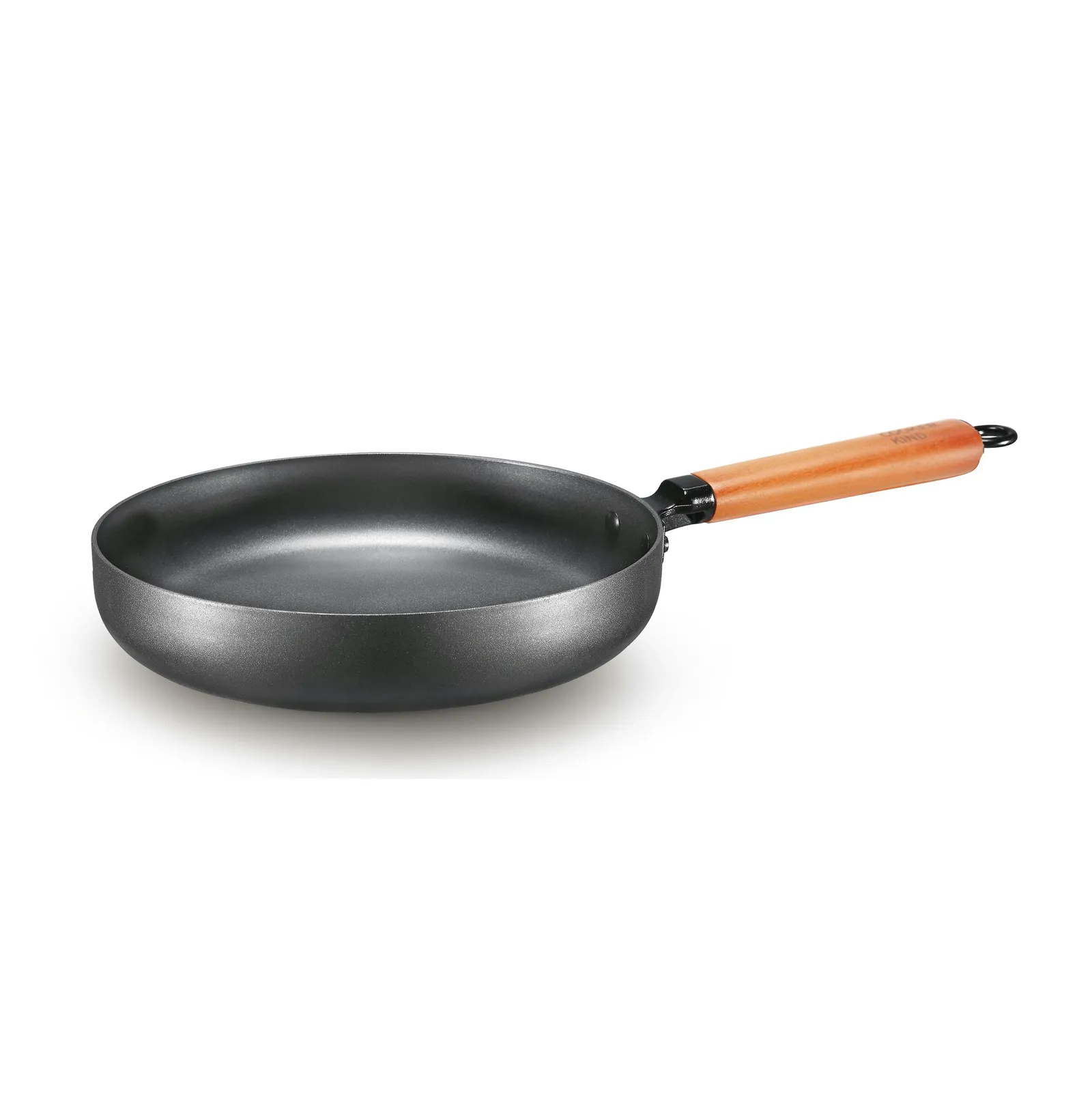
Carbon steel pans have flared, sloping sides. They are shaped like a classic frying pan or a French skillet: a wide base that angles outward to a wider rim. That shape exists for motion. Sloped sides let you toss and flip food back into the pan with a flick of the wrist, slide a spatula under a fish fillet or an omelet at a shallow angle, and evaporate liquid quickly because more surface area is exposed. Carbon steel is built for sauteing, stir-frying, and anything you fold or flip.
Cast iron skillets have tall, nearly vertical walls. That shape exists for capacity and containment: more food per diameter, room for shallow frying without splatter everywhere, straight sides that support cornbread and deep dishes, and a profile that traps and radiates heat back onto the food. Cast iron is built for searing, baking, and braising.
You cannot toss food in a walled cast iron skillet without flinging it out, and you cannot bake a tall cornbread in a shallow flared carbon steel pan. The shapes are a direct readout of what each pan is for. If you find yourself constantly tossing vegetables or folding omelets, the carbon steel shape is doing real work for you. If you bake and braise, the cast iron walls are.
Weight: carbon steel is the lighter cast iron
Here are the numbers, because the brand comparisons give you adjectives instead.
- 10.25-inch Lodge cast iron skillet: about 4.5 pounds (2.04 kg).
- 10-inch carbon steel pan (Made In, Misen, or De Buyer Mineral B class): about 2.4 to 3.3 pounds (1.1 to 1.5 kg), depending on gauge and handle.
That is a 30 to 45 percent weight reduction for a comparable cooking diameter. Loaded with a chicken or a pound of vegetables, the difference is the gap between a pan you flip comfortably and one you lift with two hands.
This is the entire pitch for carbon steel as “the lighter cast iron.” It cooks on bare seasoned iron like cast iron does, it sears well, it is oven-safe, it has no coating to wear out, and it lasts as long, but it weighs roughly half as much in the sizes you flip and toss. For cooks with wrist or hand issues, or anyone who got a cast iron skillet and quietly stopped using it because it was a workout, carbon steel solves the one problem cast iron cannot fix about itself. We made the same weight argument in the stainless steel comparison; carbon steel splits the difference, giving you iron-pan performance at closer to stainless weight.
Heat retention vs responsiveness: the searing trade
Thickness sets up a direct trade between holding heat and responding to heat, and the two materials land on opposite ends with stainless steel as a reference point.
Drop a cold 12-ounce steak onto a pan preheated to 500°F and watch the surface temperature with an infrared thermometer:
- Cast iron dips about 30 to 50°F and recovers in 15 to 20 seconds. Deepest, most even crust. The thermal mass acts like a battery.
- Carbon steel dips about 50 to 70°F and recovers fast because the thin body reheats quickly. Good crust, slightly less than cast iron on thick cuts, but it gets back to temperature in a hurry.
- Tri-ply stainless dips 80 to 100°F and recovers slowest. (Full breakdown in the stainless comparison.)
So for a thick steak or pork chop where you want maximum sustained contact heat, cast iron still wins; see our cast iron steak method for why that temperature hold matters for the crust. But carbon steel’s fast recovery is an advantage for the cooking it is designed for: searing a batch of scallops or a thin fish fillet, where you want the pan to bounce back between additions, or sauteing where you are moving food constantly and want the pan to track your heat changes.
The flip side of cast iron’s heat-holding is sluggishness. Turn a cast iron pan from high to low and it stays effectively high for two to three minutes. Carbon steel follows the dial in 30 to 60 seconds. For eggs, delicate sauces, and anything where you need to pull back heat fast, that responsiveness is exactly what you want, and it is why eggs are genuinely easier to control on carbon steel than on cast iron even though both can do them well. (Cast iron egg technique, once the pan is seasoned in, is in our eggs guide.)
Seasoning: same chemistry, different durability
Both pans build their nonstick surface the same way: thin layers of oil baked past their smoke point until they polymerize into a hard, slick film. The method is identical, and it is covered in full in our seasoning guide.
The difference is the surface underneath. Carbon steel is smooth rolled metal, so it seasons in fewer rounds and gets slick faster; many cooks have a usable carbon steel surface after three or four cooks. Cast iron’s surface is rougher cast metal (especially modern Lodge, which has a pebbled finish), so it takes longer to build but anchors a thicker, more durable seasoning once it does.
That durability difference cuts both ways:
- Carbon steel seasons faster but its thinner layer strips more easily. An acidic sauce, a long simmer, or an aggressive scrub will take carbon steel back toward bare metal quicker than it will cast iron. You re-season carbon steel a little more often.
- Cast iron seasons slower but holds. Once a cast iron pan is broken in (10 to 30 cooks), the seasoning is robust enough to shrug off normal use, and a quick deglaze does not threaten it.
Neither is hard to maintain. Both follow the same daily routine: hot water, scrub, dry on the burner, thin oil wipe. The 60-second version is in our cleaning guide, which also kills the myth that either pan is high-maintenance.
What each pan is actually for
The shapes and the thickness point to clear use-case winners. Here is the honest split.
Carbon steel wins these jobs
- Eggs and omelets: responsive heat plus flared sides for folding; lighter to tilt and roll
- Stir-fries and high-heat saute: tracks the burner, tosses food, takes very high heat
- Fish and delicate proteins: thin spatula slides under at a shallow angle; pan recovers between fillets
- Crepes and pancakes (thin batter): even thin layer, fast response, easy to swirl (cast iron does pancakes very well too, it just asks for more attention to the dial)
- Anything you flip or toss: the entire pan is designed for motion
- Cooks who need a lighter pan: 30 to 45 percent less weight than cast iron
Cast iron wins these jobs
- Searing thick steaks, chops, and roasts: the thermal mass holds temperature on contact
- Cornbread, biscuits, dutch baby, skillet cookies: walled shape plus retained heat builds crust
- Braising and dutch-oven cooking: capacity and even heat (an enameled cast iron dutch oven is the tool here)
- Shallow frying: tall walls contain oil and splatter; mass holds oil temperature
- Oven-to-table and keep-warm serving: stays hot at the table for 20+ minutes
- Campfire, grill, open flame: warp-proof under uneven, intense heat
- One-pan value: a $30 Lodge does most of this with no rival on price
Do professional chefs use carbon steel? Yes, and here is why
People notice that restaurant kitchens are full of carbon steel and wonder why home kitchens are full of cast iron. The answer is the same logic that explains why restaurants run stainless for sauces.
A line cook lifts, tilts, tosses, and flips the saute pan hundreds of times a shift. Carbon steel is light enough to do that without wrecking a wrist, responsive enough for cook-to-order service where the pan goes from screaming hot to backed-off in seconds, and durable enough to survive industrial use with no coating to fail. De Buyer Mineral B and Matfer Bourgeat are the two carbon steel names you will see on professional ranges, and they take a beating for decades.
Cast iron is too heavy and too slow to respond for that pace. A restaurant saute station cannot wait two minutes for a pan to cool down between orders. So the pro kitchen optimizes for weight and responsiveness (carbon steel and stainless), while the home kitchen, where the same cook works at their own pace and values heat retention and a $30 price, leans cast iron. Both choices are correct for their context. Copying the pro kitchen’s pan without the pro kitchen’s constraints is a common mistake, the same one we flagged for stainless in the stainless comparison.
Warping, acid, and the other failure modes
The honest downsides, because the brand pages skip them.
Carbon steel can warp. Thin metal flexes under thermal stress. Deglazing a screaming-hot carbon steel pan with cold liquid, or running it on high on a burner smaller than the pan base, can make it lose its flat bottom (cooks call it oil-canning, where the center pops up or down). A warped pan spins on a flat cooktop and heats unevenly. This is a real consideration on glass and electric ranges where flat contact is everything. Cast iron’s thickness makes it effectively warp-proof in normal use, which is why it is the better pan for high, uneven heat and for glass cooktops (handled gently for weight).
Both react to long acid exposure, carbon steel more so. A quick wine or lemon deglaze is fine on either well-seasoned pan. But a long tomato simmer or an acidic braise will strip seasoning, and because carbon steel’s seasoning layer is thinner, it loses ground faster. For weekly acidic cooking (marinara, pan sauces with a lot of wine, lemon-heavy dishes), use stainless or enameled cast iron. Bare iron of either kind is for high-heat, short-acid cooking.
Capacity and cost. A flared carbon steel pan holds less food than a walled cast iron skillet of the same rim diameter, because the usable base is smaller. And carbon steel costs more: $70 to $150 for a good one vs $30 for an entry cast iron skillet. You pay more for less capacity, and you buy it for the weight and the shape, not the value.
Cost and what to buy
Round numbers:
- Cast iron, 10.25-inch: $30 at the verified Lodge Classic Cast Iron Skillet page. Unbeatable value; the brand breakdown (Lodge vs Stargazer vs Smithey vs Field) is in our cast iron buying guide.
- Carbon steel, the restaurant standard: De Buyer Mineral B, roughly $75 to $165 by size. This is what pros use; the steel is excellent and the pans last forever.
- Carbon steel, American-made: Made In Seasoned Carbon Steel Frying Pan, about $85 to $99. Comes pre-seasoned, a bit more polished out of the box than De Buyer.
- Carbon steel, value entry: Misen Pre-Seasoned Carbon Steel Frying Pan, about $99. Pre-seasoned, decent gauge, easy on-ramp.
Carbon steel pricing clusters tightly between $75 and $150, so the real choice is shape, weight in the hand, and whether you want pre-seasoned (Made In, Misen) or raw-to-season-yourself (traditional De Buyer, which ships with a protective wax you remove first). All of them will outlive you if you maintain the seasoning.
The honest “own both” recommendation
If you cook seriously and can have two iron pans, the most useful pair is a 10.25-inch cast iron skillet plus a 10 or 11-inch carbon steel pan. They overlap surprisingly little:
- The cast iron does your searing, baking, shallow frying, and anything oven-bound or kept warm at the table.
- The carbon steel does your eggs, sautes, stir-fries, fish, and anything you flip or toss, at half the weight.
Total cost is roughly $105 to $180, and between them they cover almost everything a home cook does on the stovetop and in the oven, minus pan sauces and acidic dishes (which is where a stainless pan earns its slot; see the stainless comparison for that third pan).
If you can only buy one: buy by your cooking. Eggs-sautes-stir-fries cook? Carbon steel. Steak-cornbread-braise cook? Cast iron. Genuinely not sure, or want the best value? A $30 cast iron skillet is the higher-value, more versatile single pan, and you can add carbon steel later when you find yourself wishing the pan were lighter and more responsive for your morning eggs.
What to skip: the myths
- “Carbon steel is just a fancy, overpriced cast iron.” They are different tools. Carbon steel buys you weight savings, responsiveness, and a tossing shape; cast iron buys you heat retention, capacity, and a $30 price. Neither replaces the other.
- “Carbon steel is nonstick like Teflon once seasoned.” It is slick like well-seasoned cast iron, which is very good but not Teflon. It still needs preheat and a little fat, and it is not for cold-pan starts or metal-utensil abuse the way a coated pan tolerates (briefly) before failing.
- “Cast iron is obsolete / people abandoned it for a reason.” People moved to nonstick in the 1960s and 70s for marketed convenience, not because cast iron failed. The pans always worked; the fashion changed and then changed back.
- “You need a different seasoning oil or method for carbon steel.” Same oil, same method, same chemistry as cast iron. The only difference is carbon steel gets there in fewer rounds. See our seasoning guide.
- “Carbon steel can’t go in the oven.” It can, to high temperatures; just mind the handle material. The limit is capacity and even baking, not oven safety.
Frequently asked questions
Is carbon steel better than cast iron?
Neither is better, they are built for different jobs. Carbon steel is thinner (2 to 3 mm), lighter, and more responsive, which makes it the better pan for eggs, sauteing, stir-fries, omelets, and fish. Cast iron is thicker (5 to 7 mm), heavier, and holds heat far better, which makes it the better pan for searing thick steaks, baking cornbread, and braising. Both are bare seasoned iron with no coating, both last decades, and both season the same way. Pick by the cooking you actually do.
What are the downsides of carbon steel pans?
Three real ones. First, carbon steel can warp (lose its flat bottom) under rapid thermal shock or sustained high heat on an undersized burner, where cast iron effectively never warps. Second, its seasoning layer is thinner than cast iron’s, so it strips more easily from acidic food and aggressive scrubbing. Third, the flared shape holds less food than a walled cast iron skillet of the same diameter, and carbon steel costs more than entry-level cast iron ($70 to $150 vs $30).
Do professional chefs use carbon steel pans?
Constantly. Carbon steel is the standard restaurant saute and omelet pan (De Buyer Mineral B and Matfer Bourgeat are the two names you will see in pro kitchens). It is light enough to flip and toss hundreds of times a shift, responsive enough for a la minute service, and durable enough to survive industrial use without a coating to wear out. Cast iron is too heavy and too slow to respond for that pace of cooking.
Why did people stop using cast iron pans?
They mostly stopped in the 1960s and 1970s when nonstick (Teflon) cookware arrived and was marketed as the modern, no-maintenance, no-skill alternative. Cast iron never stopped working, it just stopped being fashionable for a generation. The current revival is a rediscovery of what the pans always did well: searing, heat retention, durability, and a naturally slick seasoned surface without synthetic coatings that wear out.
Is carbon steel lighter than cast iron?
Significantly. A 10-inch carbon steel pan weighs about 2.4 to 3.3 pounds, where a 10.25-inch Lodge cast iron skillet weighs about 4.5 pounds. That is roughly a 30 to 45 percent weight cut for a similar cooking diameter, because carbon steel is rolled to 2 to 3 mm while cast iron is poured at 5 to 7 mm. The lighter weight is the main reason cooks who love cast iron’s performance but struggle with its heft switch to carbon steel.
Can you bake in a carbon steel pan like cast iron?
Yes for most oven jobs, with two caveats. Carbon steel is oven-safe to high temperatures (check the handle, as wooden handles limit it). It roasts, finishes, and bakes fine. The caveats: the flared sloped sides hold less batter than a walled skillet, so cast iron is still better for cornbread and deep dishes, and carbon steel’s thinner body gives a slightly less even, less retained bake than cast iron’s thermal mass. For a quiche or a frittata, either works. For cornbread with a tall crust, reach for cast iron.
Should I buy cast iron or carbon steel first?
Buy by what you cook most. If your weeknights are eggs, stir-fries, sauteed vegetables, fish, and quick proteins, buy carbon steel first, it is lighter and more responsive. If your cooking leans toward thick steaks, cornbread, baking, and braising, buy cast iron first. For most home cooks who want one versatile pan, a 10.25-inch cast iron skillet at $30 is the higher-value starting point, and you can add carbon steel later.
Related reading
If you are building out your pan collection, the third material to understand is stainless steel; cast iron vs stainless steel completes the picture (cast iron for heat retention, carbon steel for responsive stovetop work, stainless for pan sauces and acidic dishes). When you are ready to buy the cast iron half, the cast iron buying guide compares Lodge, Stargazer, Smithey, and Field. The shared seasoning method for both iron pans is in how to season a cast iron skillet, and the daily care routine is in how to clean a cast iron skillet. To see the thermal-mass advantage in action, how to cook a steak in a cast iron skillet is the searing reference, and for the job carbon steel does best, eggs in cast iron skillet covers the non-stick technique that carbon steel makes a little easier. Serious Eats reached the same broad conclusion in their carbon steel vs cast iron breakdown: different pans for different jobs, not one winner.
Cast iron vs carbon steel is not a contest with a winner, it is a choice between a heat-holding walled pan and a responsive flared one. Thickness explains the whole thing: thick iron holds heat and capacity, thin steel saves weight and responds fast. Know which jobs you cook most, and the pan picks itself. Own both and the question disappears entirely.