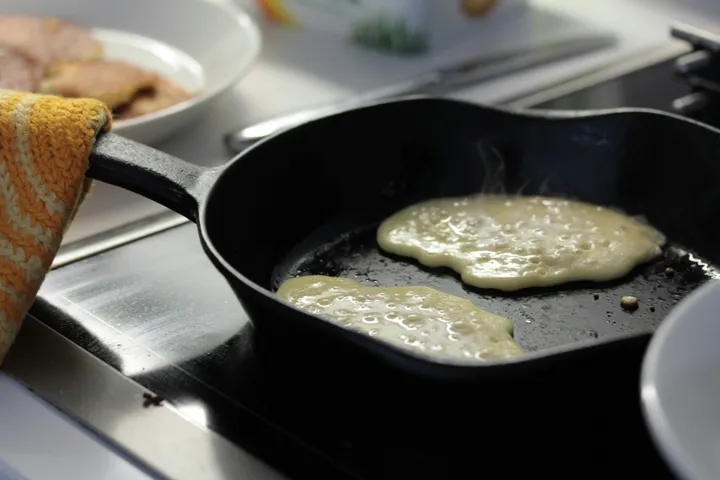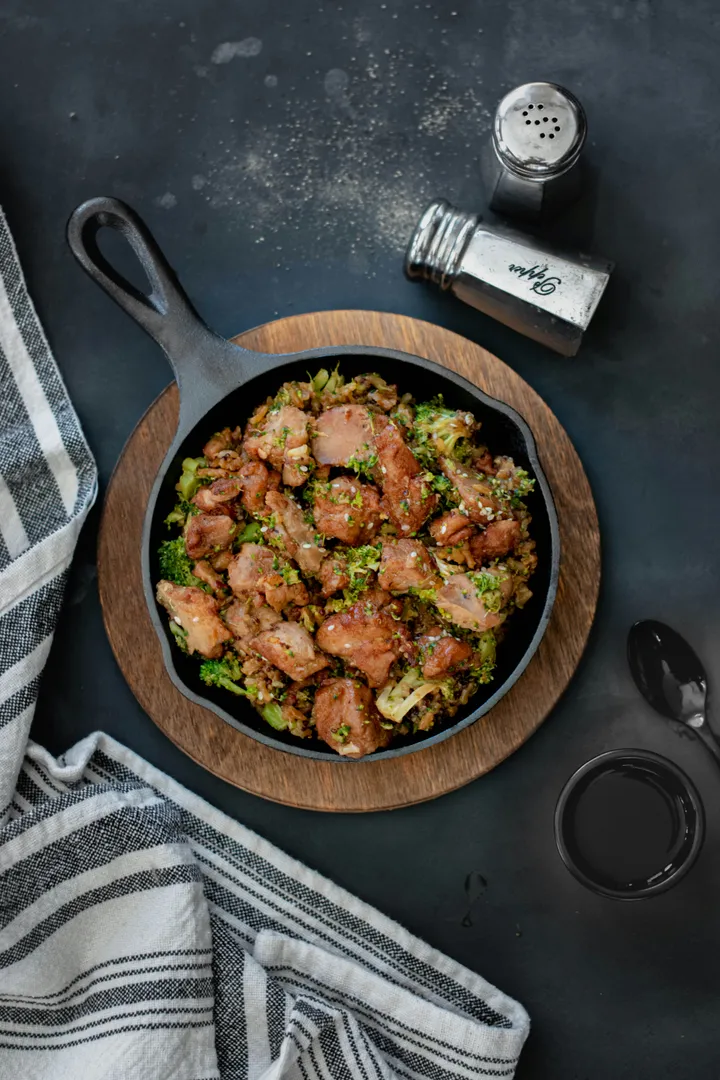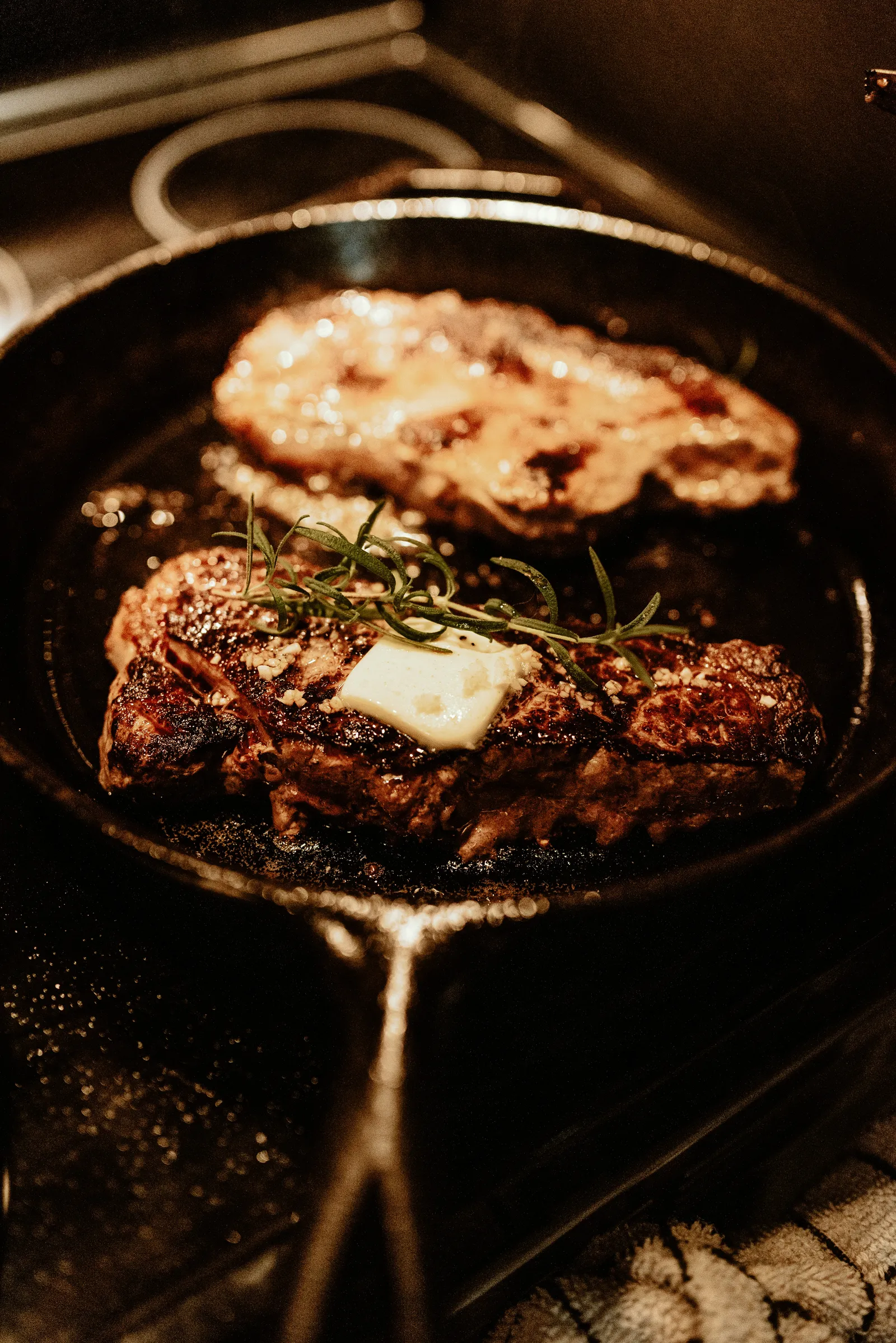
If you have a glass or ceramic cooktop and a cast iron skillet, you have probably hesitated before setting one on the other. A heavy, rough chunk of iron on a smooth glass surface looks like a scratch or a crack waiting to happen, and the internet is full of people insisting you should never do it. They are wrong. You can absolutely use cast iron on a glass top stove, and it comes down to a single rule.
That rule is: lift the pan, never slide it. Glass cooktops are scratched by abrasion, not by weight, so a pan that is picked up and set down gently does no harm, while a pan dragged across the surface (especially a heavy one with grit underneath) is what leaves marks. Appliance makers agree: both Whirlpool and Maytag confirm cast iron is safe on their glass cooktops. This guide covers the real risks (ranked honestly), which pans are gentlest, exactly how to use cast iron safely, and the induction, enameled, and diffuser questions the manufacturer pages gloss over.
Who this is for
Anyone with a smooth-top electric range (radiant glass or induction) who owns or wants to own cast iron and is worried about damaging the cooktop. Also for anyone who has read “never use cast iron on glass” and wants the honest, physics-based version instead of folklore. The advice applies to skillets, griddles, and dutch ovens, and to both radiant glass and induction surfaces.
TL;DR: the short answer and the three rules
Yes, you can use cast iron on a glass top stove. Follow three rules and you will never mark the glass:
- Lift, never slide. Pick the pan up to move it. Dragging is what scratches.
- Keep it clean. Wipe the pan bottom and the cooktop before cooking; a single grain of grit is the real scratch risk.
- Be gentle and gradual. Set the pan down softly (do not drop it) and heat it up gradually instead of going straight to high.
Everything else in this guide is detail in service of those three rules.
Yes, you can: what actually happens on the glass
A glass or ceramic cooktop is a sheet of tempered ceramic glass with heating elements (radiant coils or induction coils) underneath. It is built to take heat and the weight of full pots and pans; a cast iron skillet is well within what the surface is designed to hold. The pan simply sitting there, even a heavy loaded dutch oven, does not harm the glass.
What harms glass cooktops is abrasion and impact. Abrasion is a hard or gritty surface dragged across the glass, which leaves fine scratches. Impact is something dropped on it, which can chip or crack it. Cast iron only becomes a problem if you introduce one of those two things: sliding the pan, or dropping it. Avoid both and cast iron and glass coexist perfectly, which is exactly what the appliance manufacturers say about their own cooktops.
The real risks, ranked (scratching, cracking, weight)
Honest risk assessment, most likely to least:
- Scratching (the common one). Almost always from sliding the pan, or from grit (salt, sugar, food crumbs, casting sand) trapped between the pan and the glass. This is entirely preventable by lifting the pan and keeping both surfaces clean. A rough, pebbled pan bottom makes a slide more likely to scratch, which is why the pan you use matters (more below).
- Cracking (rare). Caused by dropping a heavy pan onto the glass, or by severe thermal shock (a cold pan slammed onto a screaming element, or cold liquid hitting hot glass). Set pans down gently and heat gradually and this essentially never happens in normal cooking.
- Weight stress (mostly a non-issue). A loaded cast iron dutch oven is heavy, but glass cooktops are rated for substantial weight. The concern is not the static weight, it is dropping it or dragging it. Lower heavy pots down with both hands and you are fine.
Notice that all three risks are about how you handle the pan, not about cast iron being inherently dangerous to glass. That is the whole point.
The pan matters: smooth vs rough bottoms
Here is what the appliance-brand articles miss, because they are written by cooktop makers, not cast iron people: not all cast iron is equally glass-friendly, and it comes down to the bottom of the pan.
- Rough, pebbled bottoms. Modern Lodge pans have a slightly rough, sandy-textured base from their casting process. It is harmless to cook on, but it is more abrasive against glass if you slide it. With a Lodge, the lift-don’t-slide rule matters a little more.
- Smooth, machined bottoms. Premium modern pans (Stargazer, Smithey, Field) and most vintage pans (Griswold, Wagner) have bottoms that were machined or polished smooth. These glide gentler and are the least likely to scratch. Our vintage cast iron guide explains why those old pans have that glassy finish.
This does not mean you need to buy a special pan. It means that if you already have a rough-bottomed pan, you simply lift it rather than slide it, and you can also smooth the bottom yourself.
How to check and fix your pan’s bottom
Run your fingertips around the cooking pan’s outer base and rim. If it feels smooth, you are done. If you feel rough high spots, casting burrs, or a sandy texture, you can smooth them:
- Set the pan upside down on a towel.
- Rub the bottom with medium-grit (around 120) sandpaper, then fine-grit (around 220), in circles, until the rough spots are knocked down and the surface feels even.
- Wipe off the dust, wash, dry, and re-season the bottom (a quick wipe of oil and a bake; see our seasoning guide).
Ten minutes of sanding turns a pebbly Lodge into a glass-friendly pan, though honestly, just lifting it accomplishes the same protection for free.
How to use cast iron on a glass cooktop safely
The full method, which is mostly common sense applied consistently:
- Start clean. Wipe the cooktop and the bottom of the pan. Grit is the number-one scratch cause, so this 10-second step does the most work.
- Place the pan down gently. Lower it onto the element, do not drop or clatter it. Both hands for a dutch oven.
- Match the pan to the element. Use a burner close to the pan’s diameter so heat is even and the glass around the pan is not needlessly heated.
- Heat gradually. Start at medium and work up. Cast iron holds heat well, so it does not need a blast of high heat to get going, and gradual heating is easier on both the pan and the glass. This also suits the way glass elements cycle on and off.
- Never slide to reposition. If you need to move the pan, lift it. Do not push, drag, or shimmy it across the surface, ever.
- Lift it off when done, and let the glass cool before wiping. Clean any spills promptly, especially sugary ones, which can pit warm glass.
Because cast iron is slow to react to temperature changes, give the cooktop and pan a minute to respond when you adjust the heat, the same patience we cover in our cast iron vs stainless steel comparison, where the heavy pan’s slow heat response is the main trade-off against thinner cookware.
Induction glass tops are different (and better for cast iron)
If your smooth-top stove is induction rather than radiant electric, cast iron is not just safe, it is close to ideal. Induction works by inducing a magnetic field in the pan itself, so it only works with magnetic cookware, and cast iron is strongly magnetic with a thick, flat base that couples efficiently with the element. Cast iron heats fast and evenly on induction.
The surface is still ceramic glass, so every scratch precaution above still applies: lift, do not slide, keep it clean, set it down gently. The one genuine induction-specific note is weight; because you are setting a heavy pan on glass, lower it carefully. Otherwise, cast iron and induction are one of the best pan-and-stove pairings there is.
Enameled cast iron on glass: the easy option
Enameled cast iron (Le Creuset, Staub, Lodge enamel) is the lowest-anxiety choice for a glass top. The enamel coating gives the pan a smooth, finished base that is gentler against glass than raw, pebbled iron, and there are no casting burrs to worry about. A cast iron dutch oven in enamel is a common and perfectly safe choice on glass cooktops.
The rules do not change, though: enamel is still heavy and still hard, so you lift it rather than slide it. And take a little extra care not to chip the enamel base by knocking it against the glass, since a chipped enamel bottom exposes bare iron.
Do you actually need a heat diffuser?
A heat diffuser is a metal disc that sits between the pan and the element. It spreads heat across the pan bottom and acts as a physical buffer between the pan and the glass. For cast iron on a glass top, it is almost always unnecessary: cast iron already distributes and retains heat better than most cookware, which is the entire reason people love it.
A diffuser can be worth it in two narrow cases: if you are genuinely anxious about scratching and want a buffer for peace of mind, or if your cooktop has small elements and you are using a large pan and want more even heat across it. For everyone else, it is an optional accessory, not a requirement. Do not let anyone tell you that you must buy one to use cast iron on glass.
The best cast iron skillet for a glass top stove
If you are buying a pan specifically with a glass cooktop in mind, the friendliest choice is a smooth-bottomed, moderately weighted skillet. That points toward the machined-base premium pans or a vintage piece. But the honest truth is that the budget champion still works fine: the Lodge Classic 10.25-inch skillet at around $30 is perfectly usable on glass; you just respect the lift-don’t-slide rule and optionally sand its bottom smooth. Our full best cast iron skillet guide breaks down the smooth-bottom premium options versus Lodge if you want to spend more for a gentler base.
You do not need to buy a new pan to use cast iron on glass. But if you are buying anyway, smooth-bottomed and not-too-heavy is the glass-top-friendly combination.
What pans you should not use on a glass top
For completeness, the cookware that actually causes glass-top trouble, and cast iron is not really on this list:
- Warped pans. A pan with a bowed base rocks and makes uneven contact, creating hot spots and the temptation to press or slide it. This applies to warped cast iron, warped stainless, anything. Use flat pans.
- Pans much larger or smaller than the element. Oversized pans trap heat against the glass; undersized pans waste energy and heat unevenly. Match the size.
- Rough unglazed stoneware and ceramics. These have genuinely abrasive bottoms and are worse for glass than cast iron.
- Anything you plan to drag. The behavior, not the material, is the problem.
Cast iron, used with the lift-don’t-slide rule, is gentler on glass than a lot of the cookware people use without a second thought.
What to skip (the myths and the real mistakes)
- The “never use cast iron on glass” myth. It is folklore. Appliance makers and cookware makers both confirm cast iron is safe on glass cooktops. Do not give up your favorite pan over a rumor.
- Sliding the pan. The actual mistake. Always lift.
- Cooking with grit underneath. Wipe the pan and the glass first.
- Dropping or clattering the pan down. Lower it gently, especially heavy dutch ovens.
- Believing you must buy a special pan or a diffuser. You do not. A careful hand is the whole requirement.
- Going from cold straight to high heat. Heat gradually; it is easier on the glass and unnecessary for cast iron anyway.
Frequently asked questions
Can you use cast iron on a glass top stove?
Yes. Cast iron works on glass and ceramic cooktops without damaging the surface or the pan, and appliance makers including Whirlpool and Maytag confirm it. The one rule that matters is to lift the pan, never slide it. Sliding a heavy, rough-bottomed pan is what scratches the glass. Set the pan down gently, keep both the pan bottom and the cooktop clean, and heat it up gradually.
Will cast iron scratch a glass top stove?
It can, but only if you slide it or there is grit trapped between the pan and the glass. The glass is scratched by abrasion, not by the weight of the pan sitting on it. Lift the pan to move it, never drag it, and wipe the cooktop and pan bottom clean before cooking. Smooth-bottomed pans are gentler than a pebbled Lodge base, but any cast iron is fine if you do not slide it.
How do you protect a glass cooktop from cast iron?
Five habits: lift the pan instead of sliding it, keep the pan bottom and cooktop free of grit, set the pan down gently rather than dropping it, match the pan size to the element, and heat gradually. Optionally, smooth a rough pan bottom with fine sandpaper or use a smooth-bottomed pan. A heat diffuser is available but usually unnecessary.
Is Lodge cast iron safe for a glass top stove?
Yes, with normal care. Lodge pans have a rough, pebbled factory bottom that is more likely to scratch glass than a smooth-machined pan if you drag it, so the lift-don’t-slide rule matters a little more. You can also smooth a rough Lodge bottom with fine sandpaper for extra insurance. Used carefully, a Lodge is perfectly safe on a glass or ceramic cooktop.
Can you use cast iron on a glass top induction stove?
Yes, and cast iron is one of the best pans for induction because it is naturally magnetic and induction needs magnetic cookware to work. The surface is still glass, so the same scratch precautions apply: lift, do not slide, and keep it clean. Cast iron’s strong magnetic base and flat bottom make it heat efficiently on induction.
Do you need a heat diffuser for cast iron on a glass top?
Usually not. A heat diffuser spreads heat and acts as a physical buffer between the pan and the glass, but cast iron already distributes and holds heat well, so a diffuser is rarely necessary. It can be reassuring if you are nervous about scratches or want gentler heat, but for most cooks it is an optional extra rather than a requirement.
What cookware should you not use on a glass top stove?
Avoid warped pans (they rock and make uneven contact), pans much larger or smaller than the element, stoneware or ceramic dishes with rough unglazed bottoms, and any pan you intend to drag rather than lift. Cast iron itself is fine; the real problems are a warped or rough-bottomed pan slid across the glass, dropped objects, and sugary spills that can pit the surface.
Related reading
Once you are comfortable using cast iron on your glass top, the rest of the care routine matters just as much. Keeping the pan bottom clean and grit-free is part of the cast iron cleaning routine, and the lift-and-handle-gently habit carries over to how to store cast iron without scratching anything. If your pan’s bottom is rough, the seasoning guide covers re-seasoning after you sand it smooth. For choosing a glass-friendly pan, the best cast iron skillet guide compares smooth-bottom premium pans against Lodge, and the vintage cast iron guide explains why old pans have those glassy machined bottoms. Finally, cast iron vs stainless steel covers the slow-heat-response trait that shapes how you cook on any electric element.
Cast iron on a glass top stove is not a risk to manage so much as a habit to build: lift, do not slide, keep it clean, and set it down gently. Do that and the heaviest pan in your kitchen lives happily on the most delicate-looking surface in your kitchen, which is exactly how the people who make both the pans and the cooktops say it should work.