Most guides on how to season a cast iron skillet skip the chemistry and jump straight to “rub it with oil and bake it,” which is why so many seasoning attempts come out sticky, splotchy, or peeling in flakes. The problem is almost always one of two things: too much oil, or not enough heat. This is the method, the polymerization reaction that makes it work, and the four ways it goes wrong.
TL;DR: how to season a cast iron skillet
- Wash the pan with hot water and dish soap. Dry it completely.
- Apply oil: half a teaspoon of grapeseed, flaxseed, or any neutral high-smoke-point oil. Rub it over the entire pan (inside, outside, handle).
- Buff it off with a clean cloth or paper towel. The pan should look almost dry. Almost all the oil comes off.
- Bake upside down at 450°F for one hour. Put foil on the rack below to catch drips.
- Cool in the oven. Don’t pull it out hot.
- Repeat three to four times for a new or stripped pan. Once is enough for touch-ups.
That’s the method. The next sections explain why each step matters and what to do when something goes wrong.
What seasoning actually is
Seasoning is not “oil that’s been baked onto the pan.” Oil baked onto a pan is grease. Seasoning is what happens when oil is heated past its smoke point in the presence of oxygen and a metal substrate, at which point its fatty-acid chains break apart and reassemble into a hard, cross-linked polymer film bonded to the iron. The technical name for the reaction is polymerization. The result is a layer of material that’s chemically closer to a thin sheet of plastic than to grease.
That distinction matters because it tells you the three requirements the method has to satisfy. Skip any one of them and the result isn’t seasoning, it’s a sticky film.
The three requirements (in order of how often people get them wrong)
- Temperature must exceed the smoke point of the oil. This is the most-skipped step. If you bake at 350°F with an oil whose smoke point is 400°F, the oil heats up, gets tacky, and bakes on as a soft film that wipes off the next time you cook. 450°F clears the smoke point of almost every cooking oil; that’s why every credible source converges on 450 to 500°F.
- The oil layer must be thin. Polymerization happens at the surface of the oil where it meets oxygen. A thick layer of oil polymerizes on top and stays liquid underneath, which is exactly the sticky-pan failure mode. The right amount of oil after buffing is so little that the pan looks almost dry.
- The reaction needs time. One hour at 450°F is the floor. Shorter than that and the polymerization is incomplete; the surface is dark but soft.
A drying oil (more on that below) accelerates and deepens the reaction, but a neutral oil with enough heat and time still gets you there. The temperature and the thinness matter more than the oil.
Drying oils versus non-drying oils
Oils are classed as drying, semi-drying, or non-drying based on how readily they polymerize when heated. Drying oils (flaxseed, walnut, tung) cure into a hard film fast and are why old hardwood floors are finished with linseed oil. Semi-drying oils (grapeseed, soybean, sunflower) cure too, just slower. Non-drying oils (olive, peanut, coconut) cure poorly and tend to produce a softer, less durable seasoning. Lard and Crisco shortening sit in the semi-drying camp and work well, which is why your grandmother’s pan was usually seasoned with one of them.
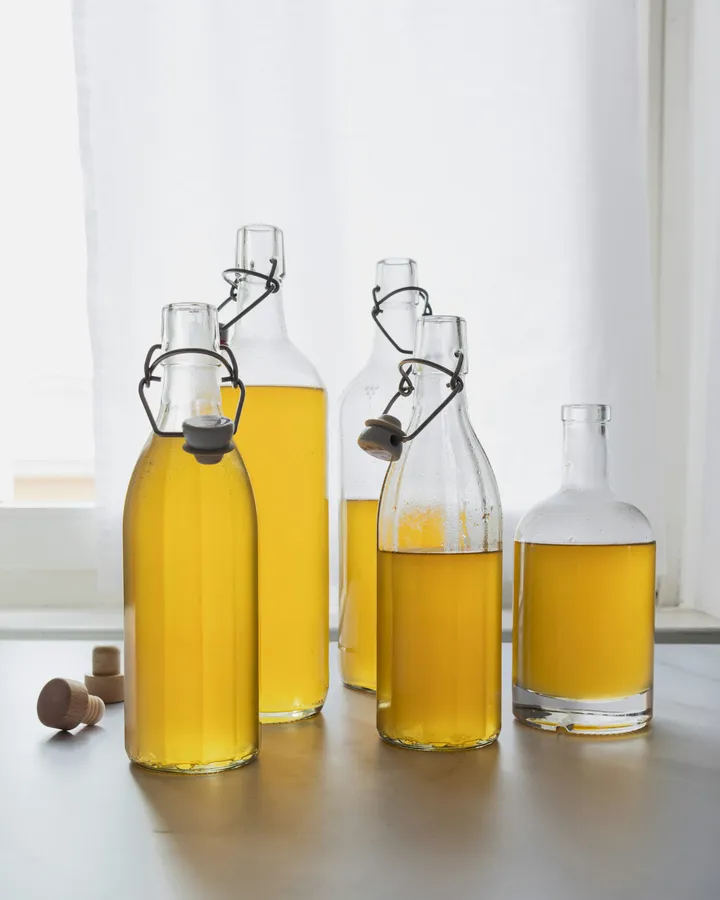
Flaxseed oil produces the hardest, glossiest seasoning out of any common oil, which is why it had a moment around 2015 as the “best” choice. The catch: flaxseed seasoning is famously prone to flaking off in sheets after several months of use, because the film cures so hard that it has very little flexibility against thermal expansion. The current consensus among the people who season cast iron daily, including the recommendation in Lodge’s own seasoning guide, is to use a more flexible neutral oil (grapeseed, vegetable, canola, or Crisco) and trade a slightly less glossy initial finish for a layer that doesn’t peel a year in. Grapeseed is the easy pick. We cover the full oil-by-oil comparison in our best oil for seasoning a cast iron skillet writeup, including the smoke-point table and what to skip.
The method, step by step
This is the canonical method. It’s the same one Serious Eats has been recommending for a decade, with the temperature and oil-quantity specifics that make the difference between a good seasoning and a sticky one.
Step 1: Wash the pan
Use hot water and a few drops of dish soap. Scrub with a stiff brush or a chainmail scrubber to remove any factory coating (on a new Lodge, this is a wax-based protective layer that needs to come off before the first seasoning). Dry the pan thoroughly with a towel. Then put it on the stovetop over medium heat for 30 to 60 seconds to drive off the last of the moisture. Water trapped under the seasoning layer is the second most common cause of patchy seasoning, after too much oil.
Yes, soap is fine. The “never use soap” rule was written when soaps were lye-based, before 1950. Modern surfactant-based dish soaps don’t dissolve polymerized oil. We have a longer treatment of the soap myth in our how to clean a cast iron skillet guide; the short version is that America’s Test Kitchen’s cookware editor says the same thing.
Step 2: Apply oil
Put about half a teaspoon of oil in the center of the pan. Use a clean cloth or a folded paper towel to spread it over every surface: the cooking face, the sides, the underside, the handle, even the underside of the handle. Every exposed iron surface gets a thin coat. This is the only round of seasoning where you really need to coat the outside; subsequent rounds can focus on the cooking surface.
Half a teaspoon sounds like nothing. It is nothing. That’s the point.
Step 3: Buff it off
Take a separate clean cloth or fresh paper towel and wipe the pan down as if you were trying to remove the oil. Wipe until the pan looks almost dry, like there’s barely any oil left. You’re not actually removing all of it (the cloth would have to be scraping bare iron, which it isn’t), you’re just leaving the molecular-thin layer that’s necessary for polymerization. If the pan looks shiny or has any visible pooling of oil, you have too much. Wipe more.
The line that helped most beginners we’ve talked to: the pan should look like you forgot to oil it. That’s the right amount.
Step 4: Bake upside down at 450°F for one hour
Preheat the oven to 450°F. Put a sheet of aluminum foil on the rack below where the pan will sit, to catch any drips (there shouldn’t be many if you buffed well; the foil is insurance). Set the pan upside down on the rack above. Upside down matters: gravity pulls excess oil off the cooking surface so it can’t pool into sticky droplets.
Bake for one hour. The pan will smoke at some point in the first 15 minutes; this is the oil reaching its smoke point and starting to polymerize, which is exactly what you want. Open a window and turn on the range hood. The smoke is harmless and stops after a few minutes.
Step 5: Cool in the oven
When the timer goes off, turn off the oven and leave the pan inside until it’s fully cool. This takes a couple of hours. Don’t pull a hot, freshly-seasoned pan out and put it on a cold counter; the rapid temperature change can crack the newly-formed seasoning film before it fully sets.
Step 6: Repeat three to four times for a new pan
A single round of seasoning is enough for a touch-up on a pan that’s already seasoned. A new or stripped pan needs three to four rounds, because each round adds one molecular layer of polymerized oil, and one layer is not enough surface to be functionally non-stick. After four rounds, the pan should be a deep brown to black, dry, slightly glossy, and noticeably slick to the touch.
You can do all four rounds in an afternoon. Cool the pan between rounds (this is the slow part), apply a new thin layer of oil, buff, bake again. By round four you’ll be able to fry an egg without it sticking, assuming your oven temperature is accurate and you didn’t over-oil.
Re-seasoning, touch-ups, and the difference
Three different things get called “seasoning a cast iron skillet,” and they need different amounts of work:
- Full seasoning: a new pan, or a pan you’ve stripped down to bare iron because the existing seasoning was beyond rescue. Four rounds of the method above. About four hours total, mostly cooling time.
- Re-seasoning: a pan whose seasoning has gotten patchy, dull, or has small rust spots. One full round of the method above. Most pans only need this once or twice a year, if at all, when used regularly.
- Touch-up: the routine practice of wiping a thin layer of oil on the pan after each clean while it’s still warm. This is what builds up the seasoning over time and is how every well-used pan reaches the glassy black state people associate with antique cast iron. No oven involved.
The single most useful insight from America’s Test Kitchen’s cleaning-and-seasoning guidance is that if you cook on cast iron regularly with any kind of fat, you almost never need to re-season; the cooking process itself maintains the seasoning. Pans only need formal re-seasoning when they’ve been neglected, soaked, or were never properly seasoned in the first place.
Troubleshooting
The four ways seasoning goes wrong, in order of frequency.
My pan came out sticky or tacky
You used too much oil, the oven was too cool, or both. Tacky seasoning is uncured polymer (the reaction was incomplete) sitting under a thin film of un-polymerized oil. The fix is easy: put the pan back in the oven at 450°F for another full hour with no additional oil added. The heat finishes curing the polymer and burns off the excess film. If it’s still tacky after that, you originally applied so much oil that no amount of further baking can complete the reaction; strip the pan with steel wool and start over.
My pan has splotchy or rough patches
Two common causes. First, you didn’t get all the factory coating off a new Lodge before the first seasoning, so the polymer bonded to wax in some spots and iron in others. Scrub harder next time. Second, water spots from incomplete drying before applying oil. The fix is to ignore the splotches and keep cooking on the pan; after 10 to 20 uses with normal cooking fats, the patches even out.
My pan smoked heavily and set off the fire alarm
Normal. 450°F exceeds the smoke point of every common cooking oil, which is the entire point. Open a window, turn on the range hood, run the bathroom fan, and the smoke will clear within a few minutes. If you genuinely cannot ventilate well enough, you can drop to 425°F with a smoke-point-aware oil like grapeseed (420°F smoke point) or avocado (520°F), but the seasoning will be marginally softer. The smoke is not damaging the pan or the oven.
My seasoning is peeling or flaking off
This is the flaxseed-oil failure mode. Flaxseed-seasoned pans cure to a brittle film that flakes off in sheets after several months of thermal expansion and contraction. The fix is to strip the affected area with steel wool (you don’t have to take the whole pan back to bare iron, just the flaking areas) and re-season with a more flexible oil like grapeseed or Crisco. Going forward, avoid flaxseed for cast iron.
What to skip
Cast iron is one of the most over-marketed kitchen tools in the world. None of these are necessary.
- Lodge Seasoning Spray (or any aerosol seasoning product). It’s $7 for an aerosolized version of the same oil you already have. The spray does not improve seasoning quality; it just lets you skip the cloth.
- The 8-piece cast iron care kit for $50. It’s a $15 chainmail scrubber, a $5 brush, and an $8 silicone handle holder, marked up. Buy the chainmail by itself.
- Pre-seasoning the bottom of the pan separately, with a different oil. Some online guides recommend this. No one will see the bottom; it does not affect cooking; treat it the same as the rest of the pan.
- “Curing” the pan in the oven without oil first. Some methods suggest pre-heating bare iron at low temperatures “to open the pores.” Iron is not porous in any meaningful sense at the molecular scale; this step does nothing.
- Flaxseed oil for general-purpose seasoning. See above. It works for one season and then peels. The internet recommended it heavily around 2015 and is mostly walking it back now.
- Re-seasoning every few weeks “to maintain the pan.” If you’re cooking with fat regularly, the cooking is the seasoning. Save the oven seasoning for actual problems.
Frequently asked questions
What’s the best way to season a cast iron skillet? Half a teaspoon of neutral oil, buffed to almost-dry, baked upside down at 450°F for one hour, repeated three to four times for a new pan. The thinness of the oil layer is the single most important variable.
Should I season cast iron at 350 or 450? 450°F. The reaction requires the oil to exceed its smoke point, which 350°F doesn’t reach for most oils. Seasoning at 350°F is the most common cause of a tacky finish.
Is it better to season cast iron upside down? Yes. Gravity pulls excess oil off the cooking surface instead of letting it pool into sticky drops. Put foil on the rack below to catch drips.
How do I know if I seasoned my cast iron correctly? The pan is dark brown to black, dry to the touch (not greasy or tacky), and slightly slick. A drop of water beads instead of soaking in.
Is Dawn dish soap good for cast iron? Yes. The “never use soap” rule comes from the lye-soap era, before 1950. Modern dish soaps don’t dissolve polymerized seasoning. We cover this in detail in the cleaning guide.
Can I use a cast iron skillet right after seasoning? Yes, once it’s fully cool. The seasoning is most fragile in its first few cooks; using high-fat foods like bacon for the first cook helps lay down additional seasoning on top of what you just built.
What you can do now
You can take a new Lodge out of the box, scrub it, season it four times in an afternoon, and have a pan that fries an egg cleanly by tomorrow morning. You can also take a vintage Griswold or Wagner you found at a yard sale, strip it with steel wool, and bring it back to working condition with the same method. The chemistry is the same; the only thing that changes is how many rounds it takes. The point of understanding polymerization, smoke points, and the thin-layer rule is that you can now diagnose any seasoning problem on any cast iron pan, instead of guessing.
When you’re ready to fix a pan that’s already gone bad, see our how to clean a rusty cast iron skillet guide for the severity-based method. When the seasoning has already failed (flaking, gummy, splotchy) and you need to strip and start over, the how to re-season a cast iron skillet walkthrough covers the diagnostic and the four strip methods. If the specific problem is a tacky or gummy finish, especially right after seasoning, the dedicated why is my cast iron sticky guide diagnoses the exact cause and the fix. When you want to know which oil is genuinely the best for the long term, we did the side-by-side: see the best oil for seasoning a cast iron skillet writeup. And if you’re cleaning a freshly-seasoned pan and worried about wrecking the work you just did, the soap myth and the actual cleaning routine are in our how to clean a cast iron skillet guide.