The hardest part of buying a cast iron dutch oven is deciding between bare and enameled. Every brand sells both, every recipe author has a preferred type, and most “best Dutch oven” articles are ranked listicles that skip the actual decision. This is the decision tree (which type for which cook), the sizing question (5qt vs 7qt vs 9qt), and the brand breakdown from the $60 Lodge to the $380 Le Creuset, with honest tier recommendations and what each brand is actually best at.
TL;DR: the decision tree
- Cook tomato sauces, braise often, want one Dutch oven for everything: enameled. Lodge Enameled Dutch Oven ($80, 6qt) for value, Le Creuset Signature Round Dutch Oven ($380, 5.5qt) for the heirloom.
- Bake bread weekly, camp, deep-fry, or already cook cast iron: bare. Lodge Classic Dutch Oven ($60, 6qt) is the value pick, Field Company Dutch Ovens ($300+, lighter-and-smoother artisan).
- Size: 5.5qt for 2-4 people, 6-7qt for 4-6, 9qt for entertaining or large bread loaves. Most American kitchens want 5.5-6qt.
- The only Dutch ovens to avoid: lightweight imitations (if it weighs under 8 lb for a 6qt, it’s not cast iron), and discount enameled Dutch ovens that don’t list the enamel coating thickness (cheap enamel crazes within a year).
That’s the whole decision. The rest of this article explains why each recommendation, what the tradeoffs are, and what you’ll actually cook.
Bare cast iron vs enameled cast iron Dutch oven
The single most-asked Dutch oven question, and we go deep on it in a dedicated cast iron vs enameled dutch oven comparison (acidic foods, health, price tiers, and which wins for what). The short version below. Both are cast iron with identical iron bodies; the difference is whether the inside has a porcelain enamel layer fused on at high temperature.
Bare cast iron Dutch oven (Lodge Classic, Field, Smithey, Stargazer):
- Cooking surface: seasoned iron. Develops a polymerized oil layer over time, like a seasoned skillet.
- Price: $60-300+ (Lodge entry-level to Field/Smithey artisan).
- Weight: slightly lighter than enameled of the same size (Lodge bare 6qt is 13 lb; Lodge enameled 6qt is 14 lb).
- Heat tolerance: very high. Can go on a campfire, into a 500°F oven, no issues.
- Acid tolerance: poor. Tomato sauce simmered over 20 minutes etches the seasoning. Strong acid (vinegar, citrus) shouldn’t sit in the pot.
- Care: like any cast iron. Wash, dry on the stovetop, wipe with oil. See our cleaning routine.
- Best for: bread baking (no-knead bread, sourdough, the boule rises to fit the pot), deep frying (stable oil temperature), camping (with the tripod-legged “camp” version), slow-cooking with non-acidic ingredients.
Enameled cast iron Dutch oven (Le Creuset, Staub, Lodge Enameled, Made In, Cuisinart):
- Cooking surface: porcelain enamel. Glassy, chemically inert, smooth.
- Price: $50 (AmazonBasics) to $400+ (Le Creuset, Staub).
- Weight: slightly heavier than bare equivalent.
- Heat tolerance: high but not extreme. Most enamel is rated to 500°F max; sustained higher temperatures can craze the enamel.
- Acid tolerance: excellent. Tomato sauce, wine braises, vinegar-based reductions are exactly what enameled Dutch ovens are designed for.
- Care: no seasoning needed. Wash with soap and water. Avoid metal utensils (chips enamel). Don’t soak overnight (water gets behind chipped enamel and rusts the iron).
- Best for: braising, tomato sauces, wine reductions, daily soups and stews, anything that needs to simmer for hours, dishes where you want consistent non-stick (the enamel is nearly non-stick after a year of use).
The honest summary: for most kitchens, enameled wins on versatility and bare wins on price + niche applications (bread, camping, deep frying). If you can only own one Dutch oven, enameled is the safer pick because it does the things bare can’t (long acidic braises) without sacrificing much on the things bare excels at.
What you’ll actually cook in it
The Dutch oven is the most versatile pot in the kitchen if you cook by browning then braising. The shape (deep, heavy-lidded, heat-retaining) is perfect for:
- Braised meats: short ribs, pot roast, chuck roast, brisket. Sear in the pot, deglaze, add liquid, cover, low oven for 3+ hours.
- No-knead bread and sourdough: the closed Dutch oven traps steam during the first 20 minutes of baking, which gives bakery-quality crust. The full method is in our Dutch oven bread guide. We’d put this as the single biggest reason to own one if you bake bread weekly.
- Soups, stews, and chili: the heavy lid and heat retention make it a slow-cooker that browns at the start. Beef stew is the canonical example.
- Deep frying: the high sides contain splatter; the heavy walls hold oil temperature stable when food enters. 350°F for frying chicken, 375°F for French fries.
- Whole roasted chicken: the closed lid keeps the chicken from drying out. Sear, then 350°F covered for an hour.
- Skillet alternatives at scale: the cornbread recipe we publish works perfectly in a Dutch oven if you scale up; same chemistry, larger volume.
What it’s mediocre at: stovetop searing of small portions (a skillet is faster), delicate fish (sticks in bare, cools too slowly in enameled), and anything where you need to see the food (the heavy lid is the whole point but it traps the food out of sight).
Sizing: 5qt, 7qt, or 9qt
The size question matters more than most articles admit. Same recipe, different pot size, different result.
5-5.5 quart (the most-popular size). Right for 2-4 people. Fits a 4-lb chicken whole; fits a no-knead bread boule made from 500g flour. A 5qt is the right “first Dutch oven” for most American kitchens. Le Creuset Signature 5.5qt is the canonical example.
6-7 quart (the family size). Right for 4-6 people, or for 2-3 people who batch-cook leftovers. Fits a 6-7-lb chicken; fits a 750g-1kg bread boule. Lodge’s most popular bare Dutch oven is 6qt. This is the second-most-common size and a slight upgrade from 5.5qt if you’re between sizes.
9 quart (the entertaining size). For 6+ people or for bread bakers who want larger boules (bread rises to fit the pot, so 9qt gives noticeably bigger loaves). Heavier and harder to lift; harder to store. Not the right first Dutch oven for most kitchens.
Smaller (3qt, 2qt): not worth it for most cooks. A 3qt does roughly what a regular saucepan does plus more weight. Useful for very small kitchens or for one-portion side dishes; skip unless you have a specific use case.
The trap to avoid is buying too small. If you’re undecided between 5.5 and 7, pick 7. The marginal capacity is more useful than the slight weight penalty.
The honest brand breakdown
Five brands worth considering. We’ve cooked on all five.
Lodge ($60 bare, $80 enameled): the value pick
Lodge Classic Dutch Oven ($60, bare). Made in Tennessee since 1896. Slightly rougher cooking surface than premium brands, which doesn’t matter for braising or bread. Pre-seasoned out of the box. With basic care, lasts decades. The Wirecutter pick for the value tier; the Serious Eats budget pick.
Lodge Enameled Dutch Oven ($80). Made overseas. The enamel coating is thinner than Le Creuset’s and the lid fits slightly less precisely, but the cooking performance is 90% as good at 21% of the price. Has been our recommendation for “first enameled Dutch oven” for years. If you’d otherwise put off buying a Dutch oven because $400 is too much, this is the article that gets you cooking.
The honest tradeoff: Lodge bare is the budget bare option. Lodge Enameled is the budget enameled option. Both lose to premium brands on cosmetic finish, lid weight, and longevity. Neither loses much on cooking.
Le Creuset ($300-400): the consensus premium
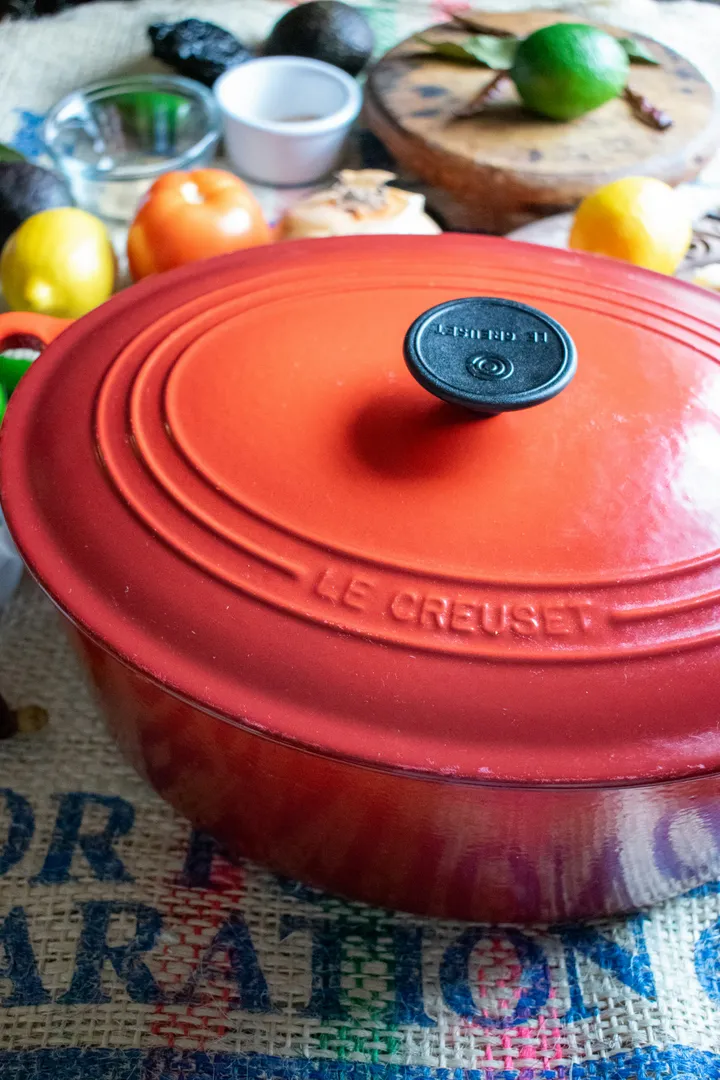
Le Creuset Signature Round Dutch Oven ($380 for 5.5qt). Made in France. The benchmark every other enameled Dutch oven is measured against. Lighter than Staub (10.5 lb vs 12 lb at 5.5qt), wider base for searing, color choices, lifetime warranty. Lid fits with the precision of a watch. Heavy enough that you feel the quality; light enough to lift one-handed.
Why it costs $380: French manufacturing labor, premium enamel (multi-coat porcelain over a thicker iron body), color-fast pigments. The first $80 of the price tag is materials and labor; the rest is brand premium. Whether that premium is worth it depends on whether you cook in it daily or weekly. Daily cooks see the difference. Weekly cooks usually don’t. For the full head-to-head against the $80 Lodge, including the warranty and durability differences that justify part of the gap, see Lodge vs Le Creuset dutch oven.
Best for: the daily-use Dutch oven you keep on the stove. The one you’ll cook 30+ braises in per year. The one your kids inherit.
Staub ($300-400): the searing-and-bread pick
Staub cast iron cocottes ($300-$400 typical). Made in France (now owned by Zwilling). Heavier than Le Creuset (12 lb vs 10.5 lb at 5.5qt), darker matte black enamel interior, spike-bottomed lid that drips condensation back onto the food during a braise. The lid is the differentiating feature: most Dutch oven lids are smooth and let condensation pool and drip unpredictably; Staub’s spikes route the condensation back to the cooking surface evenly, which is a real braising upgrade.
The dark interior browns better than Le Creuset’s cream interior (Maillard reaction shows up faster on a dark surface, similar to what we covered in the steak article).
Best for: people who sear-then-braise often (the dark interior shows browning better), bread bakers who want the steam-recapture lid, anyone who cares about the “right” tool more than the lighter weight.
Field Company ($300+): the lightweight artisan
Field Dutch Oven ($300+, bare cast iron). Made in Wisconsin and Pennsylvania. Recent revival of the lightweight smooth-surface tradition that defined American cast iron pre-1950 (Wagner, Griswold). Noticeably lighter than Lodge (10 lb vs 13 lb at 6qt) and smoother surface, which matters for bread baking and frying because the surface releases more easily.
Best for: people who already love cast iron, find Lodge too heavy or rough, and want the artisan finish without the Le Creuset price. Not a first Dutch oven; the second or third Dutch oven for someone who’s already in.
AmazonBasics / Cuisinart ($53-80): the budget enameled tier
AmazonBasics 6qt Enameled Dutch Oven ($53). Made overseas. Honestly: it works. Heavier enamel than premium brands which is brittle (more prone to chipping), and the lid fits less precisely, but as a “first Dutch oven before you commit to spending more” it’s a defensible $53. Most of the negative reviews are from people who bought it expecting Le Creuset.
Cuisinart 7qt Enameled ($80-120 depending on color/promotion). Similar tier, slightly better finish than AmazonBasics. Frequently on sale.
Best for: the absolute budget tier, dorm kitchens, second-Dutch-oven-for-a-niche-use, gift cookery for someone who’ll outgrow it.
Bare cast iron Dutch ovens (the camping case)
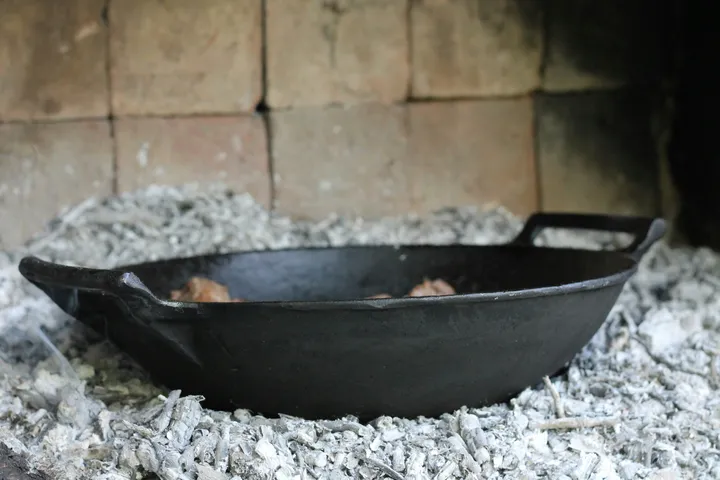
A whole sub-category of bare cast iron Dutch ovens that none of the SERP results address: camp Dutch ovens with tripod legs and flat tops.
A camp Dutch oven sits directly over coals (the tripod legs raise it off the ground) and has a flat lid that holds more coals on top (the lid heats from above; the legs let coals burn underneath). This is how you bake bread or roast a chicken at a campsite with no oven, and it’s a real subculture (Dutch oven gatherings, cook-offs, the IDOS, International Dutch Oven Society, has annual events).
If you camp, Camp Chef cast iron Dutch ovens and the Lodge Camp Dutch Oven are the two main options. $80-150 depending on size (10-12 inch / 4-6qt). Skip the home-kitchen Dutch oven for camp use; the lid and legs are the entire point.
Care and seasoning (the bare-iron requirement)
Enameled Dutch ovens need no seasoning. Wash with soap and water, dry, store. Done.
Bare cast iron Dutch ovens need exactly what a bare cast iron skillet needs: maintained seasoning. The full method is in our seasoning guide, but the short version: oil + 450°F oven + an hour, repeated for new pots. After that, the cooking itself maintains seasoning if you cook with fat.
A few Dutch-oven-specific care notes:
- Don’t store the lid sealed onto the pot for long periods. Trapped moisture inside is the main rust risk. Either store with the lid offset, with a paper towel between the lid and the pot, or with the lid on a separate shelf.
- The interior bottom takes more abuse than a skillet’s because braises sit in there for hours. If the seasoning thins over time in the bottom, do a touch-up round (one full seasoning bake; see the pillar).
- Acidic foods. If you do cook a long tomato braise in a bare Dutch oven and the seasoning looks rough afterward, it’ll look fine again after 3-4 normal cooking sessions. Acidic etching is cosmetic unless you do it weekly.
- If rust appears, see our rust-rescue guide. Even severe rust on a Dutch oven is fixable in an afternoon.
For oil choice, the same logic applies as for skillets: grapeseed or canola for the seasoning bake, anything you cook with for daily use.
What to skip
Five categories that show up regularly and shouldn’t:
- Lightweight “cast iron” Dutch ovens under $30. If a 6qt weighs under 8 lb, it’s not cast iron, it’s cast aluminum with iron coloring. They don’t retain heat the same way and will warp at high temperatures.
- Brightly-colored discount enameled Dutch ovens with no brand backing. The enamel layer matters; cheap enamel crazes (develops fine cracks) within a year of use, after which food juices stain the surface and the enamel can flake.
- Ceramic Dutch ovens. Different animal entirely. Don’t retain heat the way cast iron does, can thermal-shock crack if you move them from cold to hot, and almost never worth the cost.
- 3qt “Dutch ovens” as a first purchase. Too small for most cooking. Get the 5.5qt.
- Le Creuset for occasional cooks who’ll use it 6 times a year. The $300 premium over Lodge Enameled only pays off if you cook in it often. Lodge Enameled is the right pick for occasional use; save the Le Creuset for daily cooks.
Frequently asked questions
Is cast iron better for a Dutch oven? Yes. Cast iron retains heat better than aluminum, stainless, or ceramic. The retention is what makes Dutch ovens good at long braises and stable-temperature frying.
Are cast iron Dutch ovens any good? Yes. A reasonable cast iron Dutch oven is effectively a lifetime purchase. Lodge bare lasts 50+ years with basic care; Le Creuset is an heirloom.
What is the difference between a cast iron dutch oven and a regular Dutch oven? “Regular” usually means enameled cast iron vs bare cast iron. Same iron body, the enamel is a porcelain layer fused at high heat. Enamel handles acid, doesn’t need seasoning, costs more.
What shouldn’t you cook in a cast iron Dutch oven? Bare: long tomato simmers (acid etching). Enameled: nothing food-wise; just avoid metal utensils that chip enamel and don’t deep-fry above 400°F (enamel can craze).
Bare or enameled cast iron Dutch oven, which should I buy? If you cook tomato sauces, braise often, want one Dutch oven for everything: enameled. If you bake bread weekly, camp, deep-fry, or already have a cast iron habit: bare.
What size cast iron Dutch oven do I need? 5-5.5qt for 2-4 people, 6-7qt for 4-6 (or batch cookers), 9qt for entertaining or large bread.
How long does an enameled cast iron Dutch oven last? Decades. Le Creuset is famous for inheritance Dutch ovens. The enamel can chip if mishandled, but with basic care 20+ years is realistic.
Related reading
This article is the cookware-types entry point. When you’re ready to take cooking with the pot further:
- How to season a cast iron skillet, the same method applies to bare cast iron Dutch ovens.
- Best oil for seasoning a cast iron skillet, grapeseed or canola for seasoning the Dutch oven.
- How to clean a cast iron skillet, daily cleaning routine, applies to bare Dutch ovens too.
- How to clean a rusty cast iron skillet, when a bare Dutch oven rusts after storage in a humid spot.
- Cast iron skillet cornbread, the recipe scales up to a Dutch oven.
The Dutch oven is the one cast iron piece that justifies real money. The Lodge bare at $60 is a great first purchase. The Le Creuset at $380 is a great forever purchase. The right one is the one matched to how you actually cook, not the one with the highest review score.