Most cast iron skillet cornbread recipes give you a list of ingredients and a “preheat the skillet” instruction without explaining what that step is actually doing or why it matters more than the rest of the recipe combined. The result is that beginners follow the recipe with a cold pan and produce cornbread that’s fine but indistinguishable from a Pyrex-baked version. This is the recipe, the chemistry behind the hot-pan crust, the Southern-vs-Northern sugar question settled honestly, and the cornmeal-grind decision that nobody talks about.
TL;DR: the recipe at a glance
- Pan: 10.25-inch cast iron (how that measurement works is in our skillet sizes chart), preheated dry in a 425°F oven for at least 10 minutes.
- Dry: 1.5 cups medium-grind cornmeal, 0.5 cup all-purpose flour, 1 tsp baking soda, 0.5 tsp baking powder, 1 tsp kosher salt, 1-2 tbsp sugar (optional; see Southern vs Northern below).
- Wet: 2 cups buttermilk, 2 large eggs, 4 tbsp melted unsalted butter (plus 2 tbsp for the pan).
- Method: Whisk dry, whisk wet, fold together (under-mix). Pull hot pan from oven, melt 2 tbsp butter in it, swirl, pour batter into sizzling pan, bake 22-25 minutes at 425°F until a toothpick comes out clean and the top is deep golden.
- Rest: 10 minutes in the pan, then slice in wedges. Eat warm with butter.
Total time: 35 minutes (10 min prep + 10 min pan preheat + 25 min bake). Serves 8.
Why cast iron makes a better cornbread (the chemistry)
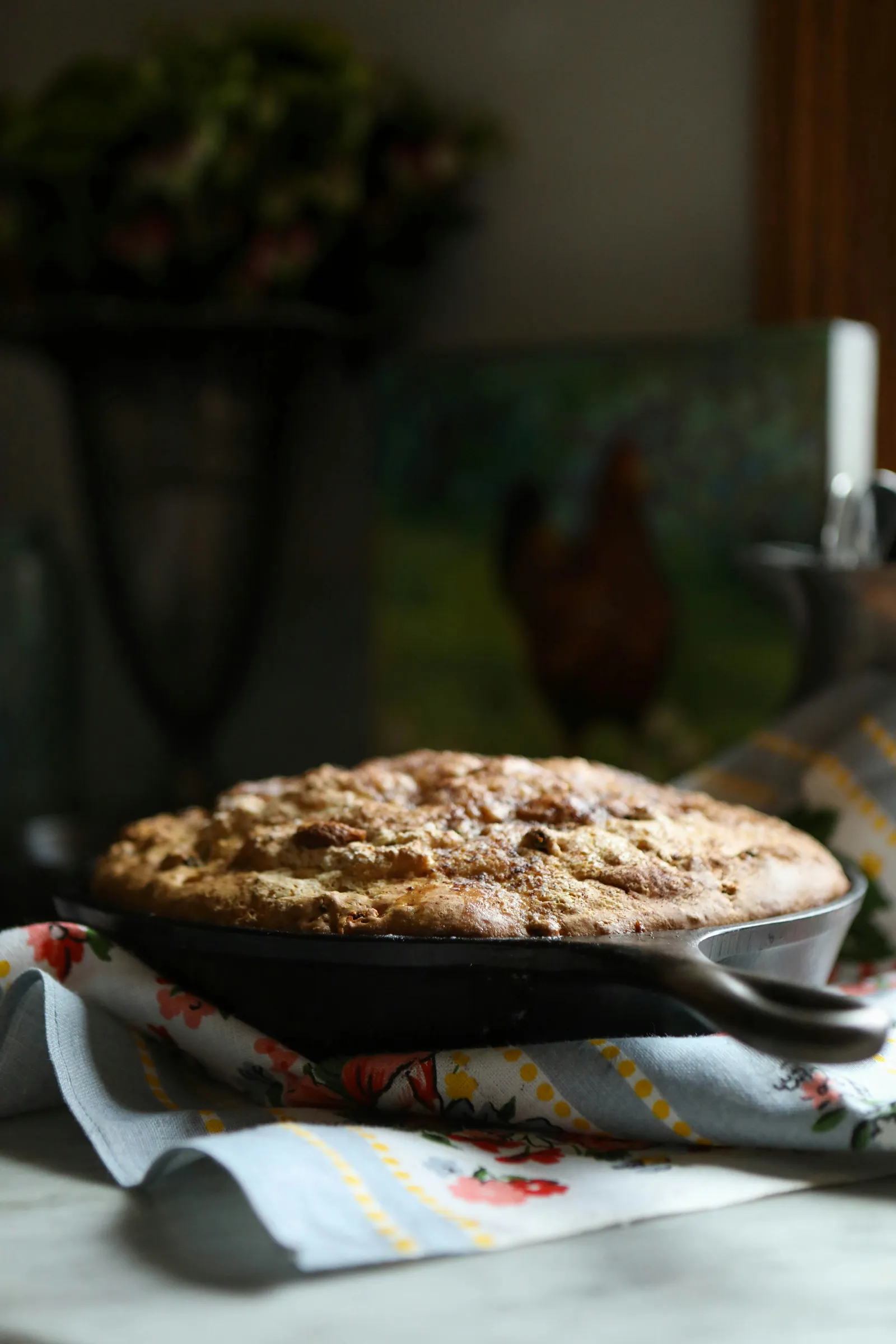
The defining feature of cast iron skillet cornbread is the crust: a deep brown bottom and rim that’s crisp, slightly Maillard-toasted, and substantially more flavorful than the rest of the loaf. The crust comes from one specific moment: the temperature of the pan when the batter hits it.
A cast iron pan preheated to 425°F holds enough thermal mass that the bottom 1-2 mm of batter goes from room temperature to roughly 350°F within seconds of pouring. At that temperature, three things happen simultaneously:
- The starches gel instantly, creating a sealed bottom layer that doesn’t let the rest of the batter slump downward and dilute.
- The fat in the pan crisps the cornmeal granules, frying them lightly into a structurally distinct crust layer.
- The Maillard reaction starts, browning amino acids and producing the brown-toast flavor compounds that define a good cornbread crust.
A room-temperature pan can’t do any of this. The batter heats slowly along with the pan; the bottom layer cooks at the same rate as the rest; you get an evenly-baked but uniformly-textured loaf. Same recipe, different pan temperature, very different result.
We covered the same heat-retention property in our steak article; the pan’s mass is what makes cast iron specifically good at high-heat surface chemistry, in cornbread and steak alike.
Cast iron skillet cornbread recipe
Ingredients
- 1.5 cups medium-grind cornmeal (stone-ground if available; Anson Mills or Bob’s Red Mill are good national brands. See “Cornmeal grind” below for why this matters.)
- 0.5 cup all-purpose flour (omit and use 2 cups total cornmeal for a more rustic, grittier texture; Southern-style purists do this)
- 1 teaspoon baking soda
- 0.5 teaspoon baking powder
- 1 teaspoon kosher salt (Diamond Crystal; halve if using Morton’s, which is denser)
- 1-2 tablespoons granulated sugar (optional; see the Southern vs Northern section)
- 2 cups buttermilk (full-fat; cultured. See FAQ for substitutes.)
- 2 large eggs, room temperature
- 4 tablespoons unsalted butter, melted (or substitute neutral oil; see “the fat question” below)
- 2 tablespoons unsalted butter or bacon grease, for the pan
Equipment
- 10.25-inch cast iron skillet (most US homes’ Lodge default). 9-inch works; 12-inch works; see the FAQ for what changes.
- A dry pan; do not add fat or oil before preheating.
- Whisk + medium mixing bowl + small mixing bowl
- Microplane or zester (for grating cold butter, if you take that route, not in this recipe)
- Cooling rack
Instructions
- Preheat the oven to 425°F with the empty cast iron skillet on the middle rack. Let the pan preheat for at least 10 minutes after the oven hits temperature; total preheat time is 20-25 minutes from cold.
- Whisk the dry ingredients in a medium bowl: cornmeal, flour, baking soda, baking powder, salt, and sugar if using.
- Whisk the wet ingredients in a separate small bowl: buttermilk, eggs, and 4 tbsp melted butter. Whisk until uniform.
- Fold the wet into the dry with a spatula. Stop the moment there are no dry pockets; the batter should look lumpy. Over-mixing develops gluten and produces tough cornbread.
- Pull the hot skillet from the oven with an oven mitt. Add 2 tbsp butter (or bacon grease) and swirl until melted and the pan is coated. The fat should sizzle and just barely smoke; if it browns or smokes heavily, work fast.
- Pour the batter into the hot pan all at once. You’ll hear it sizzle on contact. Don’t smooth the top; the rough surface bakes into texture.
- Bake for 22-25 minutes at 425°F until the top is deep golden brown, the edges have pulled slightly from the pan, and a toothpick inserted in the center comes out clean (or with a few small crumbs, not wet batter).
- Rest in the pan for 10 minutes on a cooling rack. The bottom crust firms during this rest; slicing immediately produces a soggy bottom because steam has nowhere to go. After 10 minutes, slice into 8 wedges and serve.
Notes
- Doneness signals: the top should be deep golden brown, not just pale yellow. If the top is set but the toothpick comes out wet, bake another 3-5 minutes; if the toothpick is clean at 20 minutes, pull early. Oven temperatures vary.
- Reheating: wedges reheat well at 350°F for 6-8 minutes on a sheet pan, or 20 seconds in the microwave (microwave kills the crust but is fast).
- Storage: counter, wrapped in a clean kitchen towel, 2 days. Fridge dries it out; freezer for longer storage (wrap individually in foil, freeze, reheat from frozen at 350°F for 12-15 minutes).
Southern vs Northern: the sugar question
There are essentially two cornbreads in the United States, and the difference is sugar.
Southern (savory): No sugar, or 1 teaspoon. The cornbread is essentially a savory bread, eaten with chili, greens, beans, or pot likker. Texture is gritty (more cornmeal, less flour, often 100% cornmeal). Color is pale yellow. The crust is the highlight; the crumb is dense and tender, not cakey.
Northern (sweet): 2-4 tablespoons of sugar, often more (some recipes call for 1/4 to 1/3 cup). Texture is cakey, more flour relative to cornmeal, more eggs. Often served as a side dish or a sweet bread on its own. Color is more golden. Closer to corn cake than savory bread.
Neither is wrong; they’re regional. If your family cornbread is the cornbread you grew up with, that’s the one to make. The recipe above uses 1-2 tablespoons of sugar as a middle position. Drop to zero for traditional Southern, push to 1/3 cup for Northern. The structure (the buttermilk-soda chemistry, the hot pan, the cast iron) is the same.
For more on the historical and regional context, Serious Eats covers why traditional Southern cornbread skips sugar. The short version: Southern cornbread predates Northern by about a century; Northern cornbread evolved when wheat flour and sugar became cheaper after the Civil War and bakers adapted the recipe.
Cornmeal grind and what it changes
The cornmeal grind matters more than the brand, and most recipes don’t mention it. Three grinds you’ll see:
Fine grind (sometimes “polenta” if it’s Italian-style, “finely ground” if it’s domestic). Produces a cakey, tender crumb without grit. Closer to a corn cake. Often used in Northern-style cornbread.
Medium grind (the most common store-shelf grind, what you get from Quaker or default Bob’s Red Mill). Produces a tender crumb with mild bite. The default for most recipes including this one. The right choice if you don’t know the difference.
Coarse / stone-ground (Anson Mills, some artisan brands). Produces a rustic, gritty cornbread with real texture and pronounced corn flavor. The traditional Southern grind. Closer to a savory cornbread.
If you make cornbread frequently, having both medium and stone-ground in the pantry covers everything: medium for everyday, stone-ground for serving alongside chili or pot roast where the rustic texture sits right.
Don’t substitute corn flour (very fine, used in things like masa harina) or corn grits (which are too coarse and need pre-cooking). Cornmeal is the specific intermediate grind.
The fat question: bacon grease, butter, or oil
The fat you melt in the pan before pouring the batter affects flavor more than texture. Three real options:
Bacon grease. The traditional Southern choice. Adds a pronounced bacon-fat flavor and a deeper Maillard browning (saved bacon grease has caramelized milk solids from the bacon cure). The right call if you serve cornbread with savory dishes (chili, greens, beans). Wrong call if you want a neutral cornbread to go with dessert or sweet butter. You can save bacon grease from the morning bacon in a jar in the fridge; it keeps for a few weeks.
Unsalted butter. Adds rich dairy flavor and excellent browning from the milk solids. The default; what’s in the recipe above. Slight risk of burning if the pan is too hot when you swirl it, so move fast.
Neutral oil (grapeseed, vegetable, canola). The lightest option, both in flavor and crust color. Produces a paler, cleaner-tasting cornbread. Right if the cornbread is the main bread and you want it to recede flavor-wise behind whatever you’re eating with it.
We cover oil selection in detail in our best-oil article for cast iron in general; for cornbread, you don’t need a high-smoke-point oil because you’re not searing, just lubricating the pan before the batter pours.
Using Jiffy mix in cast iron (when you don’t want to do it from scratch)
Jiffy Corn Muffin Mix is the boxed product in most American pantries. Used as the box directs, in a cast iron skillet at 425°F, you get a serviceable cornbread that’s better than the box’s recommended baking-dish version. Three improvements that make it 80% as good as scratch:
- Use buttermilk instead of milk. The box recipe calls for milk; buttermilk gives you the same acid-leavening chemistry as scratch and noticeably better flavor.
- Add an extra egg. The box recipe is light on egg; an extra one adds richness and a slightly less crumbly texture.
- Preheat the pan. Same as the scratch recipe. This is the single most-impactful change.
Two boxes (16 oz total mix) + 2/3 cup buttermilk + 2 eggs + 2 tbsp melted butter, mixed and poured into a hot 10.25-inch skillet at 425°F. Bake 20 minutes. The result is far better than the box suggests and indistinguishable from a casual scratch recipe to most eaters.
What to skip
Five recommendations that show up regularly and aren’t useful.
- The “no-sugar = authentic” purity test. Both Southern and Northern cornbread are real. Pick the one you like. Don’t argue with your in-laws about it.
- Glass or aluminum pans. They can’t hold the heat for the crust. If you don’t have cast iron, the recipe still works, but the result is closer to corn cake than cornbread.
- Cooking spray for the pan. Cooking spray contains lecithin and propellants that gum up cast iron seasoning over time. Use real fat (butter, bacon grease, oil) in the pan.
- Letting the batter sit for 30 minutes before baking. Some recipes claim this “hydrates the cornmeal.” It does, slightly, but it also starts deactivating the baking soda. Mix the batter and pour it within 2-3 minutes.
- Yellow vs white cornmeal as a major decision. Slight flavor difference, mostly cosmetic. Use whichever is in your pantry. White cornmeal is slightly more common in Southern recipes; yellow in Northern; either works fine.
Frequently asked questions
Is cornbread better in a cast iron skillet? Yes. The preheated pan hits 350-400°F when the batter contacts it, which creates a Maillard-browned crust that a room-temperature pan can’t. The hot pan is the single biggest variable in the recipe.
What temperature do you cook cornbread in a cast iron skillet in the oven? 425°F with the pan preheated at least 10 minutes. 450°F for a slightly darker crust; 400°F is the floor.
What are three things you should not cook in a cast iron skillet? Tomato sauces simmered over 20 minutes (acid etching), delicate fish (sticking), strong flavors that bleed into next-day cooking (curry, fish). Cornbread doesn’t have any of these problems.
Should I preheat my cast iron for cornbread? Yes, always. Put the pan in the oven cold and preheat to 425°F. Add the fat to the hot pan just before pouring the batter. The crust depends on this step.
Can you make cornbread without buttermilk? Yes, with adjustments. Swap 1 cup buttermilk for 1 cup whole milk plus 1 tsp lemon juice (sit 5 min to curdle), or 1 cup plain yogurt thinned with water. Buttermilk’s acid activates the baking soda; without it, swap to baking powder.
What size cast iron skillet for cornbread? 10.25-inch is the sweet spot for this recipe. 9-inch produces thicker, moister cornbread (longer bake). 12-inch produces thinner, crispier cornbread (shorter bake).
Related reading
This recipe is the canonical cast iron application. To take the technique further:
- How to season a cast iron skillet, the preheat-and-bake at 425°F requires a properly seasoned pan. If your cornbread sticks to the bottom, that’s a seasoning problem.
- Best oil for seasoning a cast iron skillet, covers the broader oil question and smoke points.
- How to cook a steak in a cast iron skillet, same Maillard chemistry, different application.
- How to clean a cast iron skillet, after the cornbread cools, a quick chainmail scrub and an oil wipe; the residual fat in the pan helps maintain the seasoning.
A cornbread baked correctly in cast iron has a crust like a steakhouse and a tender, slightly sweet (or savory) crumb. The technique isn’t complicated; what’s complicated is throwing out the “preheat the skillet” instruction-without-context and replacing it with hot-pan-makes-the-crust. Once you’ve done it once, every cornbread after that is in a different category.